This is a contribution from a Swampscott High School student, as part of the Swampscott Tides Big Blue Student News selection.
Story by Sasha Fafel. Monica Sager contributed to this story.
For commercial lobsterman Mike Gambale, the job has never been just about catching lobster. It’s a way of life — one he worries could disappear as only four commercial fishermen remain in Swampscott.
Gambale started his career as a commercial fisherman and lobsterman in 1974, shortly after finishing high school. Since then, he has captured lobsters in the Swampscott Harbor and fished in other local ports. Gambale belongs to the Massachusetts Lobstermen’s Association.
“It’s more than just a job,” Gambale said. “It’s a lifestyle. We enjoy being here.”
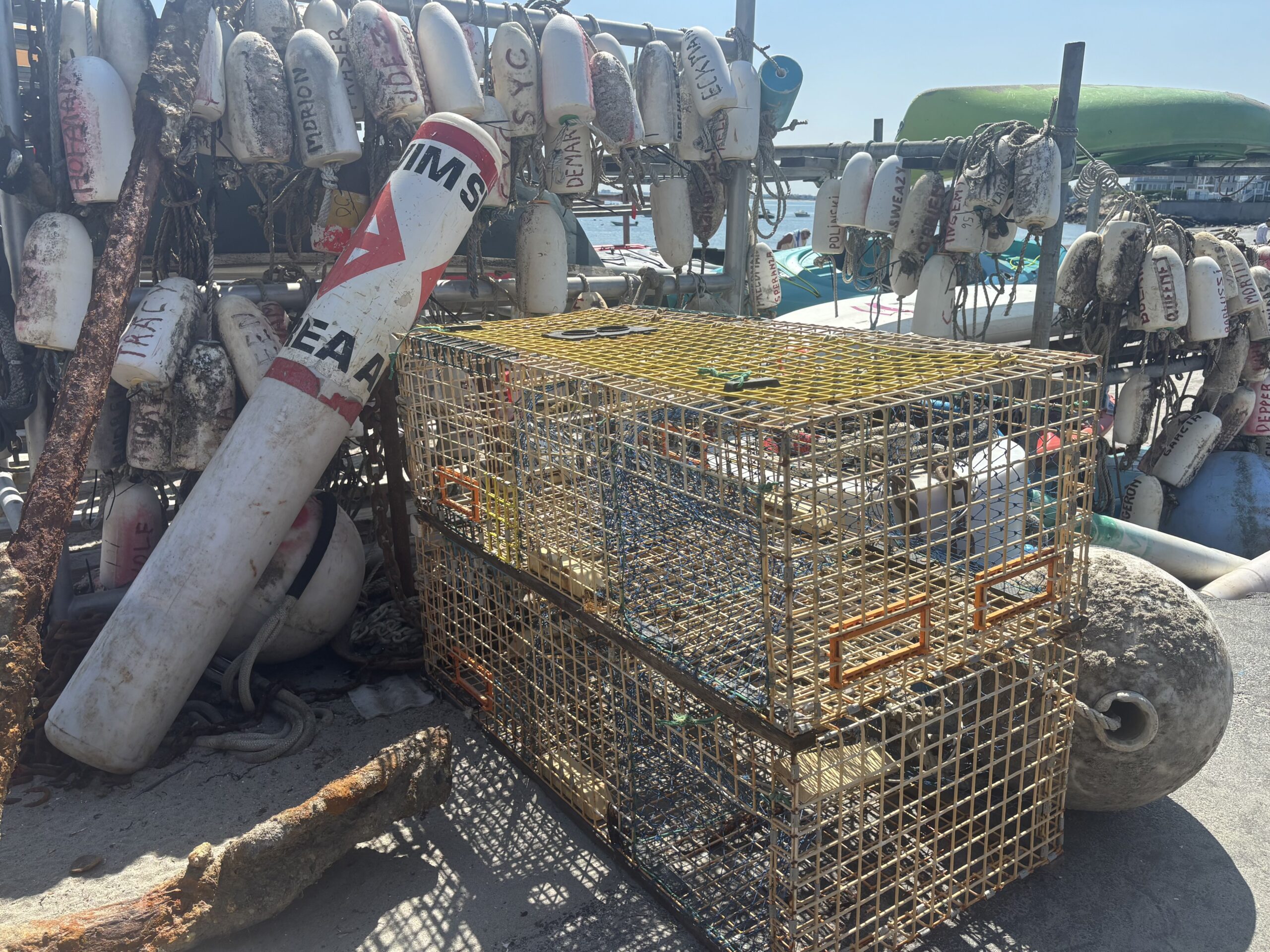
Lobstering trips start as early as 4:30 a.m. and typically end around noon. Gambale said that lobsters travel closer to the shore during their molting season in the summer months, which allows fishermen to travel along the coast to capture them.
Peak lobster capturing season runs from mid-May through December, when Massachusetts waters close to protect the whale population. Fishermen bait traps and leave them in the water for several days before hauling them in.
“Weather conditions, water temperature, everything affects how the lobster is active,” Gambale said.
After they’re hauled in, Gambale sends the lobsters to a local wholesale facility, where they’re sorted and sold to restaurants, retailers and processors, he and fisherman John Ingalls said.
But now Gambale’s work is almost a rarity in Swampscott.
Gambale is one of just four commercial fishermen remaining in town. At one point, there were nearly 30 boats in Swampscott’s fleet, he said.
“The few fishermen here, we’ve been here for our whole lives, and we like it here,” Gambale said. “We are willing to put up with certain things for that luxury.”

Other communities, Gambale and Ingalls explained, have more advanced facilities that transport traps straight to the boats. In Swampscott, everything is done by the fishermen themselves.
Gambale and Ingalls said environmental protections for eelgrass, combined with increasingly shallow harbor waters, have made it harder for commercial fishermen to operate. When harbor waters become too shallow, fishermen risk losing boats during severe weather and may be unable to safely reach open water.
“That’ll be the end of an era, and it’ll be the only port on the East Coast that doesn’t have fishing,” Gambale said. “It’s going to be really hard to encourage fishermen to come back here. There is not a lot for them. We need dredging. It’s unsafe. The water’s too shallow. We need a lot of things here.”
State funding for commercial fishing projects is largely based on annual landings, Ingalls said.
“Every time you fish and you sell your fish, you have to fill out a daily report, where you caught it, the depth, the weight, and what time you left and came back,” Ingalls said.
Ingalls and Gambale said support of the Swampscott fishing industry goes a long way, as it has a major impact on the local prominence of seafood. They’re now hoping to gain enough recognition for repairs to the Swampscott Pier.
The Swampscott Fish House is the oldest active building of its kind in the country, built in 1896 after the removal of privately-owned shanties on Fisherman’s Beach. The building is listed on the National Register of Historic Places.
“It’s important that the town doesn’t forget the history of this,” Ingalls said.
Last year, Town Meeting allocated $150,000 for pier improvements. C. White Marine, the only bidder on the repairs, submitted a proposal of $195,750.
While none of the repairs are “real critical,” Select Board Vice Chair Danielle Leonard said in a meeting last fall, upgrading the pier is considered a key step in ensuring the historic Swampscott Fish House can continue to operate at its current location.
Looking ahead, climate change is a leading challenge to the Fish House. Just a few yards away from the building, the three or so steps down to the beach in reality is part of a larger stairwell that now is covered by erosion and rising sea levels.
“Over the years, little by little we have lost ground,” Gambale said. “Now I want to make sure that people understand that this is ours to use.”