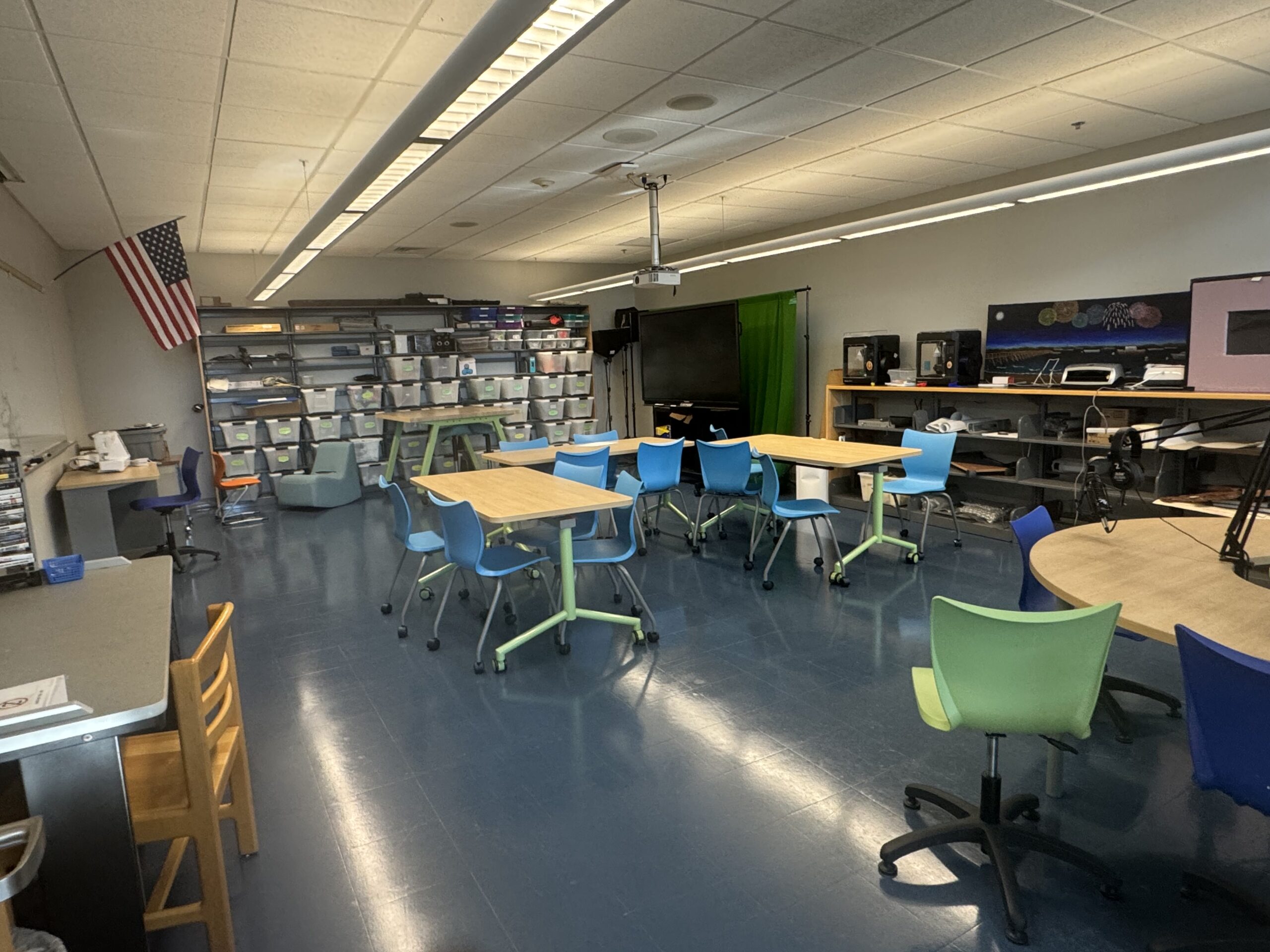
In the back of the high school library, there’s a room where Swampscott students can innovate and create individually, as part of a club or during class.
Brandy Wilbur, the high school’s digital learning specialist, may hold the keys to the I-Lab, but students are the ones steering the learning.
“They’re always trying to brainstorm different things,” Wilbur said.
Innovation at the high school level takes on a more student-led approach than in the middle or elementary schools. The I-Lab gives students space to explore independently or collaborate with a teacher, allowing them to immerse themselves in projects however they see fit.
Wilbur previously served as the district’s STEM coordinator, working to integrate science and technology across all disciplines. When the library was closed, she said the district was able to “bring it back to life with a STEM focus.”
“It’s a hub of that stuff in here, which is awesome,” Wilbur said. “The town has really invested money in here to make the flip happen.”
The I-Lab includes a podcasting station, which Wilbur said many students use for fun. Beyond those side projects, the recording equipment supports a variety of classes, including a financial literacy course that produces short podcasts each year.
“I also work with JoE Douillette with the TV media, and we have a process of how to publish the podcasts,” Wilbur said. “Journalism classes, marketing classes, maybe even math, use it as a way to demonstrate their learning. The students could choose to do a podcast.”
The I-Lab also features 3D printers, sewing machines, robots, and a wide range of other materials.
“There’s all sorts of different things that are in here,” Wilbur said.
Outside the lab setting, Wilbur works with Lytania Mackey, the district’s director of technology, digital learning, and innovation, to support the tech ninjas program.
The tech ninjas program runs as a class, and students must interview with Wilbur to join. She typically has about 15 students throughout the year, and they can take the course repeatedly each semester.
“We literally need people that want to be here to help us,” Wilbur said. “A lot of times the students are giving up a study hall period.”
Some help desk students focus more on library-related work such as book cover repairs, inventories, and displays. Others handle technology tasks like fixing screens, setting up new devices, helping teachers with Google or Apple tools, or troubleshooting when issues arise.
“We have an army of kids in the building that when something doesn’t work for a teacher, they can help,” Wilbur said. “That’s been super successful and appreciated by the teachers.”
But Wilbur said the impact goes beyond the day-to-day tech support. Launched in 2014, the program is designed to build skills that can prepare students for technology-focused jobs in college and help them narrow their post–high school plans. Students take on responsibilities, gain practical skills, and many discover new strengths and pathways they hadn’t considered before.
“When I look at Genius Bar or Geek Squad, the intro jobs, and what skills do they need to have, that’s my goal, that they could walk right into one of those customer service intro jobs by the time they leave,” Wilbur said.