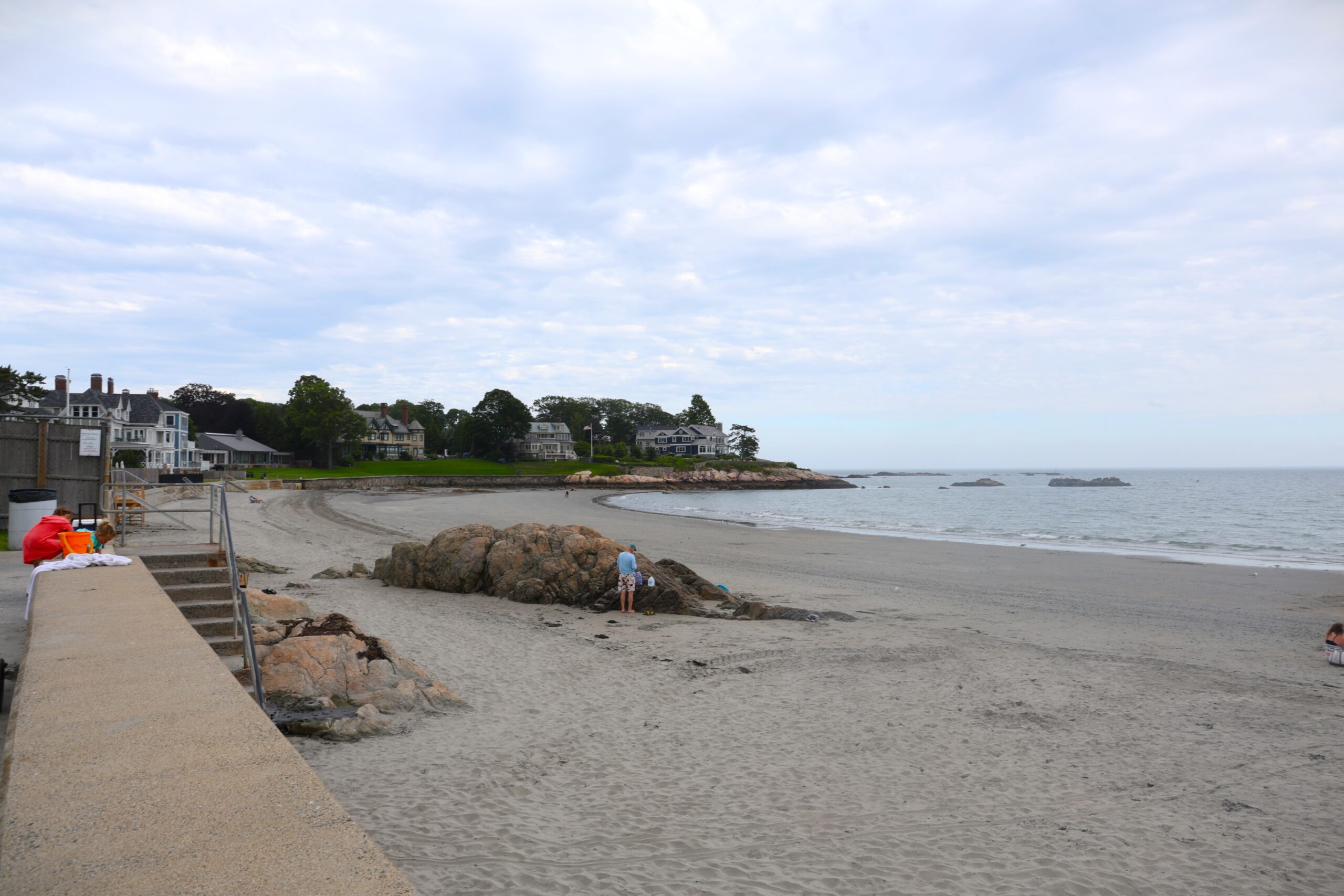
Multiple “no trespassing” signs that were recently posted in an area on Whales Beach may have already been removed.
KP Law, who serves as the town counsel for Swampscott, is currently in the process of reviewing what areas the public has access to the beach, and where – if anywhere – is specifically private.
Swampscott Conservation Commission Member Glenn Tarpinian said during a meeting on Tuesday that after walking the beach this week, he believes some of the signs were removed. He said at a visit two weeks ago, there were over a dozen signs.
“I was down there yesterday, and a lot of signs have come down, which surprised me,” said Tarpinian. “I would say a significant number of the signs have come down.”
In 1981, the Massachusetts Appeals Court decided to uphold the town’s claim to the easement by Whales Beach, allowing the public to use the area from the retaining wall through the ocean. A land court judge confirmed the “rights of the town of Swampscott, its inhabitants and (23) named individual respondents to use so much of said land as lies seaward of the retaining wall…for all usual purposes for which a beach is used.”
The abutters appealed, but the decision was ultimately affirmed after trial. Witnesses testified about the public’s longstanding use of the beach and said the Department of Public Works had maintained the area “from June 1 to September 15, depending on the weather, since at least 1956.”
In 2010, Joseph and Gladys Della Porta, owners of a waterfront parcel at 165 Puritan Road bordering Whales Beach, challenged their property assessment.
“At the hearing of this appeal, the evidence submitted established that the appellants originally owned a large portion of beachfront property, but by means of a settlement agreement and consent order dated January 11, 1988, they made a gift of the majority of the land to the town and retained a small portion for themselves,” the court review reads. “The subject property thus has access to its own small, private beach, located between two areas of ledge, marked by ‘private’ signs and cordoned off with rope.”
The Appellate Tax Board found that the Della Portas “failed to offer sufficient documentary evidence to support their claim that the subject assessment included the value of the tidal property beyond the seawall.”
The issue has resurfaced in recent weeks, however.
Conservation Commission Chair Tonia Bandrowicz said at a previous meeting that property owners were told they couldn’t put up no trespassing signs at Whales Beach, but “they said, ‘Oh, no, no, we have a settlement agreement.'”
On Thursday, Bandrowicz said that the town has a prescriptive easement on land beside a house, next to a park, on Whale’s Beach.
“It’s a second house, closer to the rocks, that claims there was an agreement with the town,” said Bandrowicz. “But apparently, even under the agreement, the house doesn’t have the whole beach. There is still public access to get from Whale’s Beach easement to Eisman’s Beach.”
The signs were supposedly put up by residents, or representatives, of the “second” house.
KP Law is looking into the agreement that the homeowners have with the town.
“If it turns out in the agreement they do have some claim to the property, fine, but I don’t think it’s all the property,” said Bandrowicz. “It should be made clear that people can still walk.”