Essex County Sheriff Kevin Coppinger has been on the criminal justice reform path for most of his life. Coppinger graduated with degrees in criminal justice from Northeastern University and Anna Maria College. He is also a graduate of the FBI National Academy.
He served as a police officer in Lynn for 32 years, including seven as chief. In 2017, he was sworn in as sheriff of the county’s “very diverse, all-over-the-place” 34 cities and towns. Now, Coppinger is serving his second term.
He focused on staff training early in his tenure as Essex County sheriff, working to ensure the safety of everyone who works, visits or resides in the county’s correctional facilities.
“As one of the largest Sheriff’s departments in Massachusetts, we are proud to deliver strong public safety outcomes while operating with one of the smallest budgets for a department our size in the state,” Coppinger said.
The Essex County Sheriff’s Department budget for fiscal year 2026 was $88,095,018, with projected reserves of $92,940,183. The department includes 572 employees, along with 200 vendors and volunteers, serving an average inmate population of 906.
“Approximately 7,500 inmates come and go here annually. That’s a lot of people,” Coppinger said. “When I got here in 2017, the population here was just shy of 1,500. Today, it’s around 900. We can’t take credit for all of it, but we will take credit for some of it. Gone are the days of people in jail that are in those low rated offenses. There’s some tough people here…If we do the job right, it’s increasing public safety. It’s lowering the crime rates and equally important is increasing the quality of life in the neighborhoods for people.”
Because the facility houses “everyone here,” Coppinger also described it as “a bit like a chess game.” Different levels of classification, as well as issues involving aggressiveness, must be taken into consideration, he said.
“We also have dormitory housing,” Coppinger said. “If the inmates are following all of those rules and procedures we have, and they get credit for doing stuff and if their charges allow, we’ll put them in a housing area.”
He said the focus has been on changing the culture within the facilities. Some inmates have jobs within the housing units to help keep them clean — even the intake area is pristine, with civilian clothes stored on dry-cleaner-style conveyor racks and shoes organized in large bins.
But the overall feel of the facility is “like a college campus,” with different services housed in separate buildings and inmates walking outdoors to move from one place to another. Within the gated walls, inmates can be seen greeting one another, along with officers and the dogs patrolling the grounds. They walk to class and line up for lunch. Coppinger joked that it can be a “dynamic operation” at times.
The Essex County Sheriff’s Department has had the lowest cost per inmate among all 14 Massachusetts counties for the last five years. The correctional facility was built in the early 1990s, Coppinger said. When the old Salem jail was ordered to close, the new correctional facility was built with double-bunked rooms to accommodate more inmates. The buildings now have capacities of 480, 240, 120 and 160 inmates.
A Correctional Opportunities for Personal Enrichment program was created for inmates needing mental health support.
“Low-risk, mental health, like anxiety levels that are too much that they can’t control,” Coppinger said. “We got a grant a few years ago for 40 beds, so we put 40 guys in there and we were able to hire additional licensed clinical social workers, and we embed them right in the unit during the workday. It’s pretty much treatment on demand.”
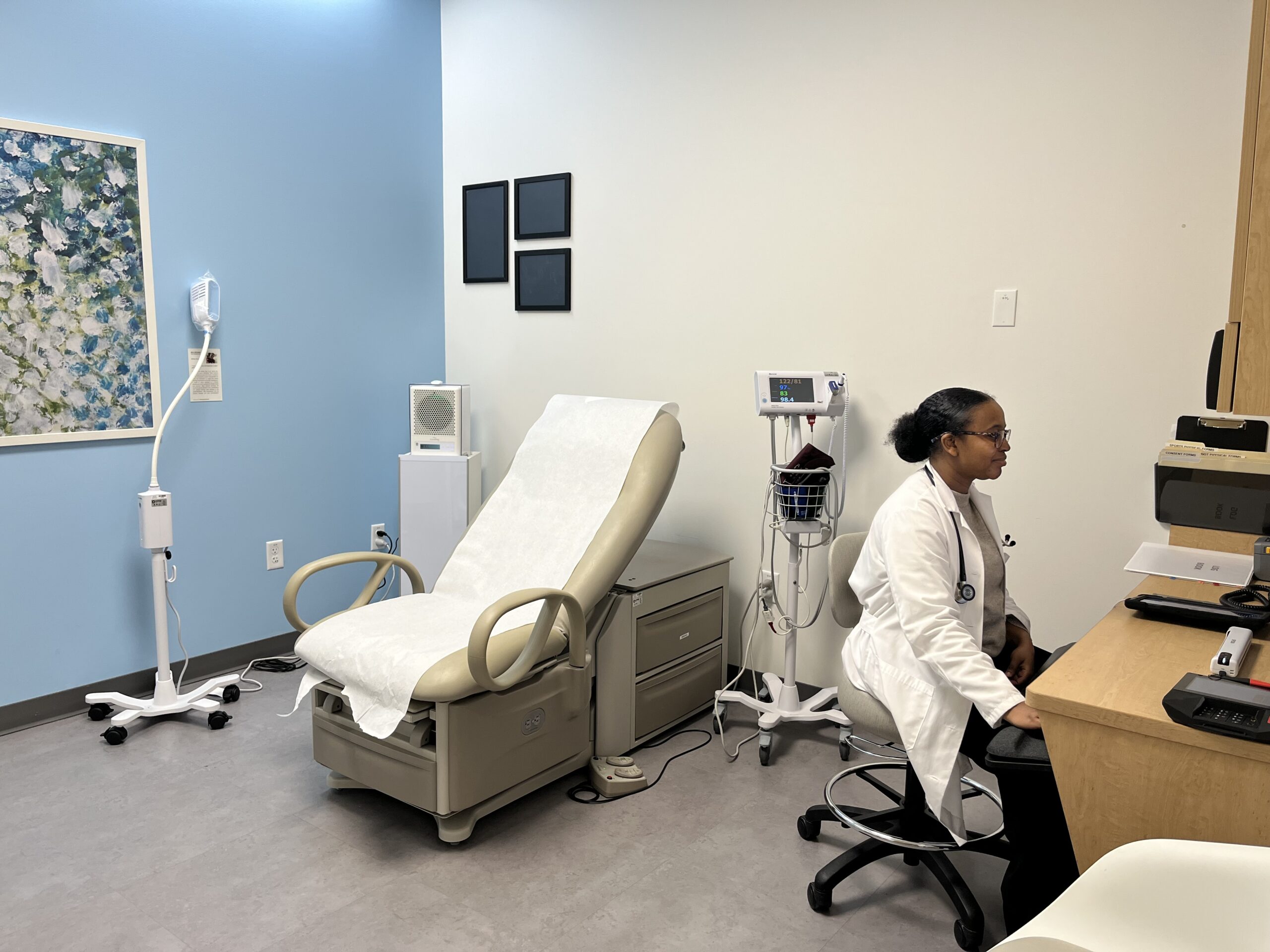
There is also a medical facility on site, which Coppinger said was designed to “look at the bigger picture” by addressing needs as they arise and where they arise.
The facility offers medication-assisted treatment, which Coppinger said has made the Essex County Sheriff’s Department “the gold standard and a national model,” hosting sheriff’s offices from across the country to learn how its methadone-based, community-clinic approach helps people “maintain a life while managing addiction.”
Coppinger also started the Supporting Transitions and Re-entry (STAR) program, a collaborative community initiative that helps individuals successfully reintegrate into society and avoid returning to the justice system. It creates a “full continuum of services,” he said.
“It was just this cycle of repeat offenses, so one of the things we did with the staff here is to come up with a plan to focus on the re-entry and focus on the root causes of behavior, why they’re getting arrested,” Coppinger said. “The two main root causes of behavior are mental illness and substance use disorder.”
The programs building works to “get inmates prepared to re-enter society,” Coppinger said. With more than 100 programs offered each week through partnerships with local academic, medical and vocational providers, inmates can earn certificates and take classes in subjects ranging from anger management to computer programming.
“We tailor it, depending on who’s here and what they need at the time,” Coppinger said.
Classrooms resemble traditional college settings, complete with modern technology. Students are assessed, and inmates are recognized for their achievements. Recently, 220 inmates earned 270 certificates, Coppinger said.
In 2025, the Essex County Sheriff’s Department reported Massachusetts’ lowest one-year recidivism rate — defined as a person’s return to criminal behavior, rearrest and incarceration — at 13.5%.
The Essex County Sheriff’s Department also offers vocational programs, including an on-site barbershop and plumbing training.
There is also a pre-release and re-entry center in Lawrence called “The Farm,” where inmates volunteer to plant, tend and harvest thousands of pounds of produce each year. In 2024, more than 24,000 pounds of produce were donated to people in need throughout Essex County, while another 11,000 pounds were used by the department’s food services program across its three facilities.
“They know that if they don’t follow the rules, they’re coming back here, so there’s incentive for them to behave and move on,” Coppinger said.