Many residents have taken to Facebook to ask about the recent blasts and rumbling sounds heard around town. To investigate, the Swampscott Tides has dug into the issue and uncovered some answers for our readers.
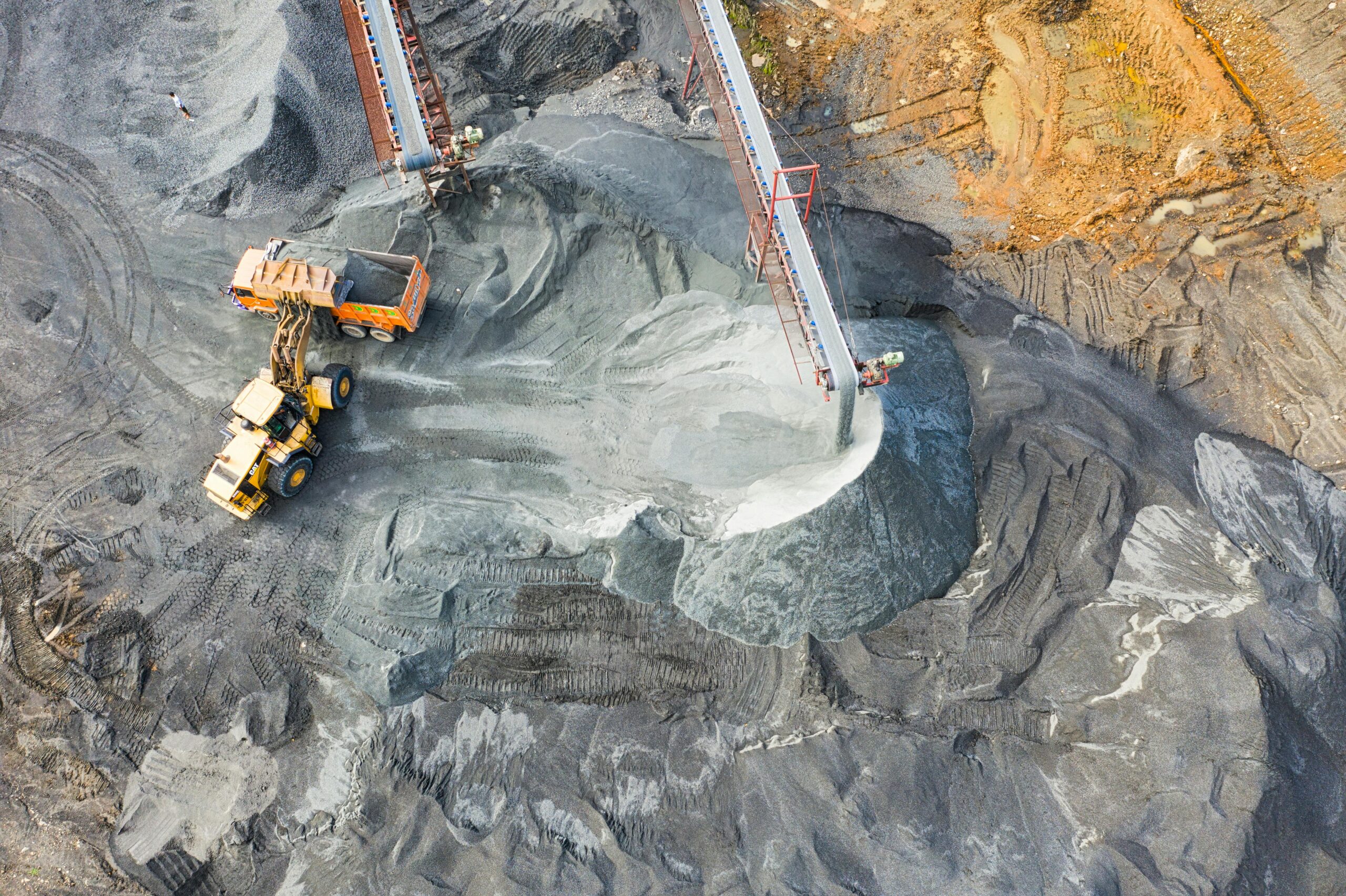
The Swampscott Quarry, on Danvers Road, has been around – in various states of operation – for over a century. The quarry is located in both Swampscott and Salem, with activities taking place in both municipalities. While most of Holcim US’s (also known as Aggregate Industries) operations occur in Salem, the impacts are often felt in Swampscott.
“Activities in the quarry are regulated through various federal and state regulations; local regulation takes place through the Earth Removal permit issued by the Town of Swampscott,” the town website reads.
In the past year, there were 28 blasts, according to Earth Removal Advisory Committee Chair Joseph Markarian. There were 32 in the year before, and so far in 2025 there have been eight blasts.
About 90 residents get a pre-blast notification, he said.
Chris Drucas, an attorney who has represented Holcim and the quarry since 1994, said that his clients recognize that “this is clearly not an ideal place to have a quarry.”
“It might have been when it started, but that was years ago around 1908 when there weren’t very many people in Swampscott living anywhere near the quarry,” Drucas said.
In the past, many Swampscott residents have equated the quarry blasts to earthquakes.
The quarry has not been without controversy: rocks have damaged cars, a worker tragically died in 2023 due to a rock crusher malfunction, and a fire broke out this past April.
Last summer, the town had reached a settlement with the industrial group after Aggregate had filed a complaint in the US District Court in Boston in 2021, claiming Swampscott and the Select Board had regulated and restricted Holcim’s business.
Most recently, the Select Board approved Holcim US’s 2025-26 earth removal permit on Tuesday, June 18, allowing for Holcim to operate from July 1, 2025 through June 30, 2026.
The vote followed a joint meeting between the Select Board and Earth Removal Advisory Committee on June 4. The meeting takes place annually, according to Markarian.
“Every year, we look at the permit with the idea of streamlining it, clarifying languages, making things make sense, and we continued to do that in this permit recommendations,” Markarian said. “This permit is substantially unchanged from the permit that emerged from the settlement agreement last year.”
There were “a number of sections in the permit” that had previously suggested documentation should be posted on the town website, but Markarian said his committee spoke greatly on the topic and decided that “having that information available with viewing within the office of community and economic development” would be sufficient.
The committee also reworded a section to now have Holcin “monitor and assess the dust control measures.” Another provision eliminated the wind-development assessment requirement, stating instead that any changes must be documented.
Heavy metal testing was last conducted in 2019, and Earth Removal Advisory Committee Member Tonia Bandrowicz said the next round will occur this summer, with results shared with the Select Board. It was originally intended to occur every year, but was later decided that every five years would be enough, according to Markarian.
Air monitoring and noise testing, however, are completed each year.
Drucus said Holcim is “very sensitive to the environment.” He added that the additional monitoring “has benefitted the citizens of the town dramatically.”
Additional language was put in place to suggest that Holclin must be in “substantial compliance,” in order to be considered for a renewal of the permit in the future. A noise test was also included with the air quality test requirements in the renewal section.
“They were well within the perimeters this year,” said Earth Removal Advisory Committee Member John Picariello.
The blasting parameters within the contract are meant to protect residents in the area, according to Markarian. He added that when residents start to take to Facebook to complain about the blasts, the committee looks at the recent reports.
“Very often they’re within perimeters,” Marakarian said. “There are external features that affect impacts: barometric pressure, cloud cover, wind, what direction the blast is going in, where in the quarry it is. So there’s other factors other than the perimeter restrictions that we set.”
Markarian said that his committee has received “very few” complaints. There were no written, formal claims to the Fire Department in the past year, according to Markarian.
Select Board Member Mary Ellen Fletcher said in the June 4 meeting that she heard a “sense of hopelessness” from residents that “nothing gets done” after a complaint is made.
“I really would like to find a way of how we can resolve that,” Fletcher said. “If people are feeling that their homes are being damaged and that they have to fight with the insurance company, and your company is saying ‘hey it’s on the insurance company, it’s not us anymore.’ I feel like there’s an issue there and the residents aren’t really being taken care of.”
The Select Board agreed there should be additional community outreach as well as a town tour of the quarry.
Residents are able to report an issue with a recent blast through See Click Fix. The Blasting Regulatory Review Form can be filled out as well for alleged damage to property as a result of blasting. Any questions should be directed to the Swampscott Fire Department at 781-595-4050.