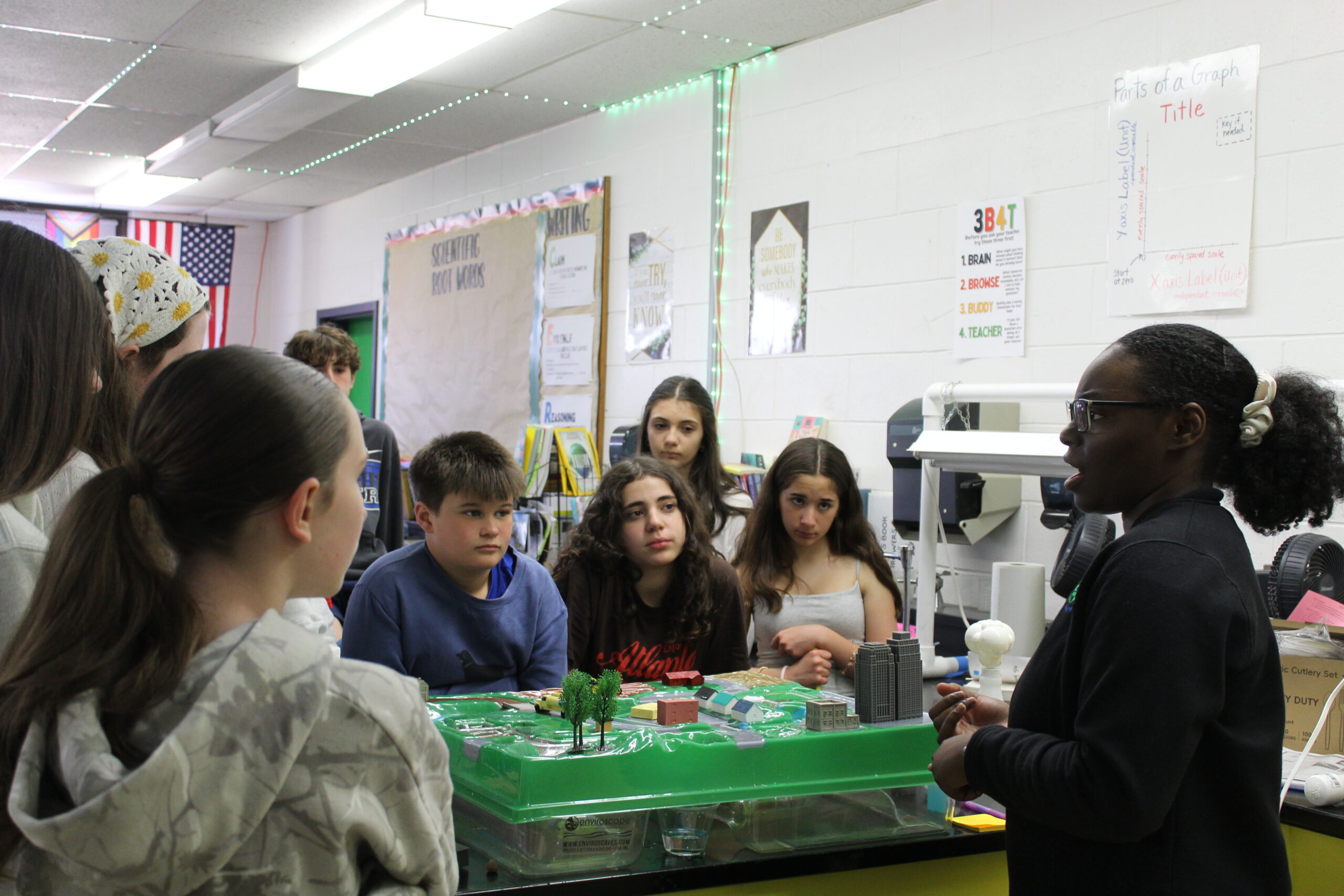
The Environmental Protection Agency (EPA) visited Swampscott Middle School on Thursday to give a lesson on ecological restoration to the seventh grade science classes.
“We are very focused on making sure the environment is safe,” said Maggie McCallum, who is a part of the EPA’s environmental education team.
McCallum and Community Involvement Coordinator D’Shyla Duncan gave students a hands-on lesson demonstrating the effects of pollution on towns and water systems. Duncan first showed students how there are two separate water systems: one for drinking water and one for wastewater
She then allowed the students to sprinkle “pollutants,” which was Kool-Aid powder and hot chocolate powder, around the diorama town.When the “rain” — a bottle of water — hit the model, students watched the powders spread throughout the area and contaminate the entire space
“It rains everywhere,” Duncan said. “Sometimes in communities, when (pollution and flooding) happen, sometimes it does hurt marine life. It can even hurt the plants that are in the water and make it unsafe for people to consume. We think about these things when we’re flooding, when certain areas have a lot of pollution or there is a high risk of flooding in certain areas.”
Students also examined filtration systems, wetlands and cleanup solutions.

“Those are the things that the EPA is trying to get out and make sure we’re not putting into our water because it is hard for the human eye to be able to see,” Duncan said. “You wouldn’t be able to detect it. Sometimes you wouldn’t even be able to taste it but it can cause harm to your body.”
hey also discussed how pollution can harm residents and discourage new people from moving into affected communities, leaving current residents feeling “stuck.”
“We see a lot of instances happen like this in communities where there’s not a lot of resources or access to do something like that, where you could just get up and leave,” Duncan said.
Duncan connected the lesson to Swampscott by referencing the combined sewer overflow issues at King’s Beach. The diorama demonstrated how sewer overflows can contaminate waterways.
“We want to make sure that people are healthy, that the green life is healthy and that if you’re going to a place like the beach you don’t want to be swimming in dirty water,” McCallum said.