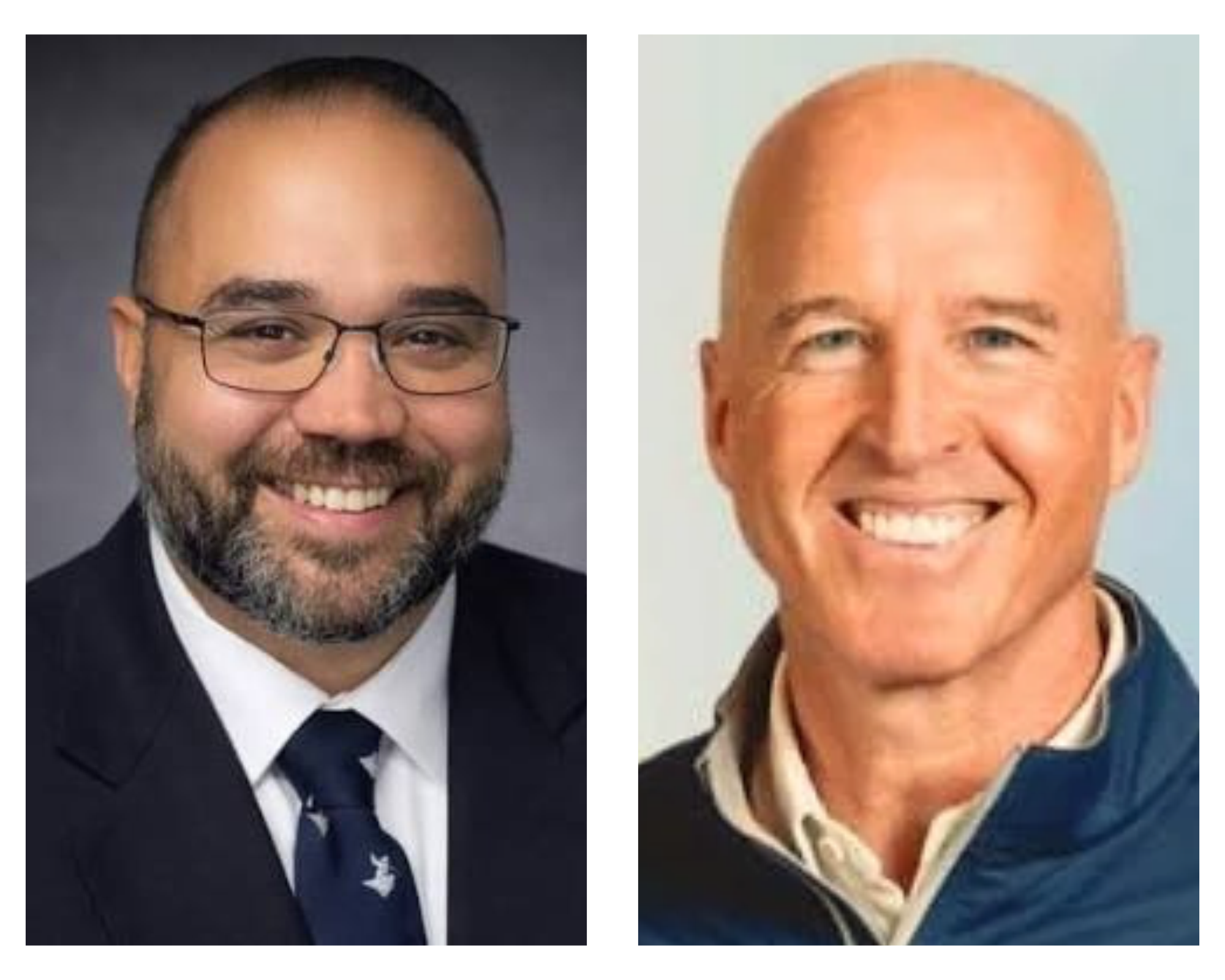
Rabbi Michael Ragozin of Congregation Shirat Hayam says Rosh Hashanah offers a time to seek community, even amid conflict and chaos.
Rosh Hashanah, the Jewish New Year, begins at sunset on Monday and continues through sunset on Wednesday. “Rosh” means “head” in Hebrew, and “Shanah” means “year.” The two-day holiday is the first of the High Holy Days. Because Judaism follows a lunar calendar, Rosh Hashanah falls on different dates each year in the Gregorian calendar.
Growing up, Ragozin said his family wasn’t affiliated with a synagogue, but his mother would bring them to services for Rosh Hashanah and Yom Kippur, the Day of Atonement, which will be observed next week.
“It’s a way of affirming one’s own Jewishness,” Ragozin said. “It’s a concrete action to reform their beliefs and identity.”
During Rosh Hashanah, a shofar, a hollowed-out ram’s horn, is blown as a spiritual “wake-up call,” urging self-reflection. Apples dipped in honey are eaten to symbolize a sweet new year, along with other traditional foods such as round challah.
Today, Ragozin says the celebration is more important than ever.
Since October 7, 2023, Jewish communities across North America have faced a historic surge in antisemitic threats and incidents, according to the Anti-Defamation League (ADL). In 2024, the ADL recorded 9,354 antisemitic incidents in the United States, a 5% increase from the 8,873 reported in 2023. This marks a 344% increase over the past five years, and an 893% increase over the past decade.
Incidents of vandalism and assault in particular significantly rose in 2024. While incidents decreased by 14% at Jewish institutions, they still remained elevated compared to pre-October 7, 2023 levels, according to the ADL.
Massachusetts saw a total of 438 antisemitic incidents in 2024, compared to 440 in 2023 and 152 in 2022, according to the ADL. Over 60% of the incidents were harassment, making Massachusetts the sixth state nationally for such an occurrence. Vandalism took place for 36% of the occurrences, making it the fourth state nationally, and there were five incidents of assault, according to the ADL.
“We’re in not only a Jewish world but an American and global world that is in crisis,” Ragozin said. “Peope want to find their community. They want to find connection.”