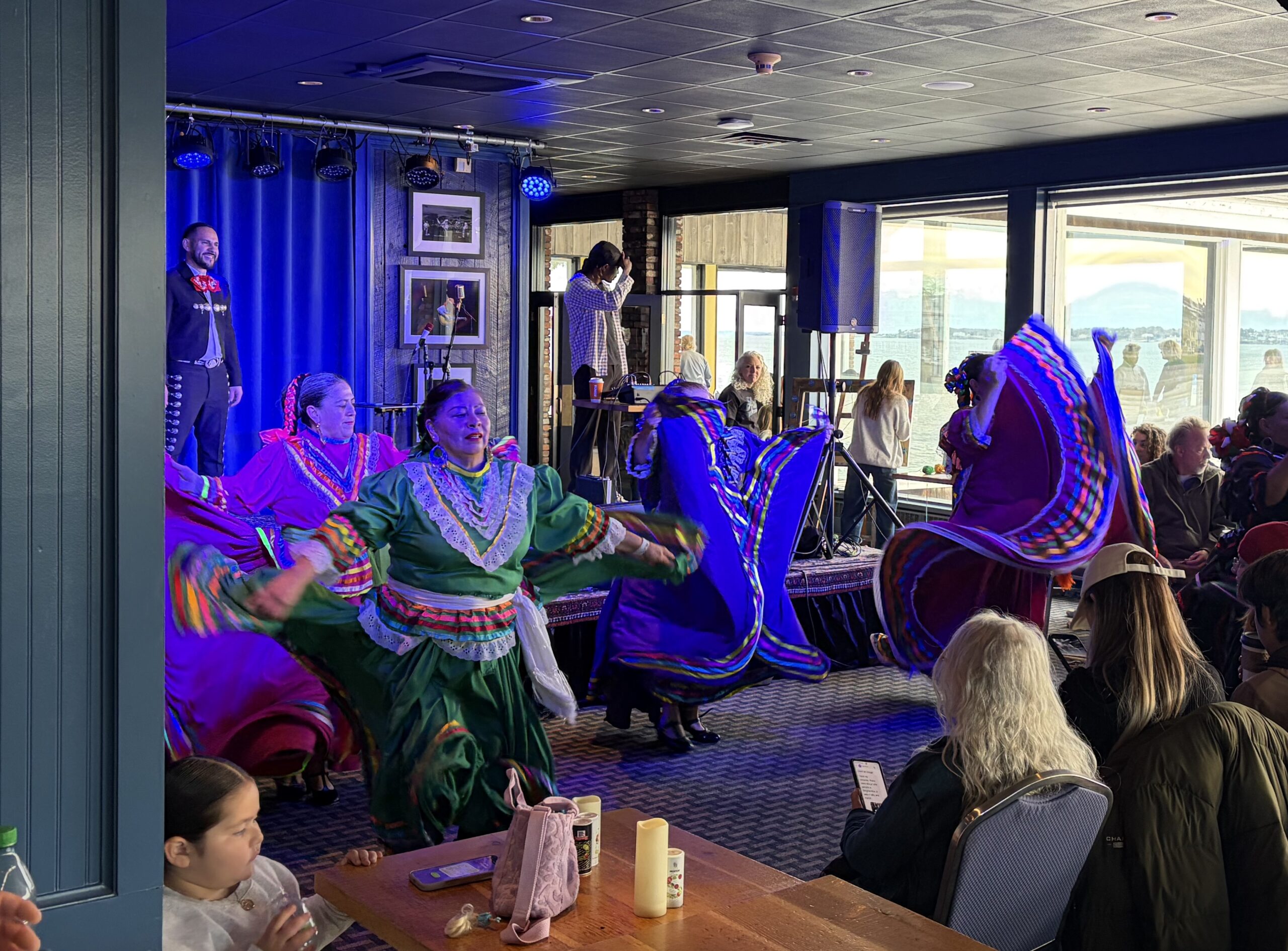
At local nonprofit Swampscott Unites, Respects & Embraces (S.U.R.E.) Diversity’s Black History Month celebration held earlier this year, a Swampscott High School student raised concerns about heightened experiences with racism throughout the district, but the administration said they respond to “any incident brought to our attention…immediately.”
“Whenever an incident comes up…Those aren’t situations we want to push to the side,” said Principal Emily Zotto. “We want to face them head on.”
The Centers for Disease Control and Prevention (CDC) reports that about one in three high school students have experienced racism on campus. In 2023, reported experiences of racism within high schools were most prevalent nationwide among Asian (56.9%), multiracial (48.8%), and Black or African American (Black) (45.9%) students and least prevalent among white students (17.3%).
And within both the town and the school district, Swampscott is not necessarily an outlier. Most widely known, the Swampscott Police Department was accused of targeting the Black Lives Matter activists in 2021 after a protester was arrested for allegedly assaulting a woman. The 80-year-old woman later admitted to throwing water at the protester, who said he reflectively raised his arm to block the water bottle.
Within the school district, at the Black History Month event in March, student Janerys Jaquez said she has experienced more racism this school year than in previous years. She said it’s hard to address racism at the school because other students may doubt it’s taking place.
“We are making changes in the school…but I think we need to make a faster and better change and really understand what kids are going through,” Jaquez said.

Students of color at Swampscott High School have reported varying experiences with what they have seen and heard this year. While some students told the Swampscott Tides and Big Blue News they have noticed an increase in racially charged incidents, others said they have seen little evidence of it.
Administrators and staff members told the Swampscott Tides that progress has been made and that the district continues to work to ensure every voice in the Swampscott High School community is heard and encouraged to speak up.
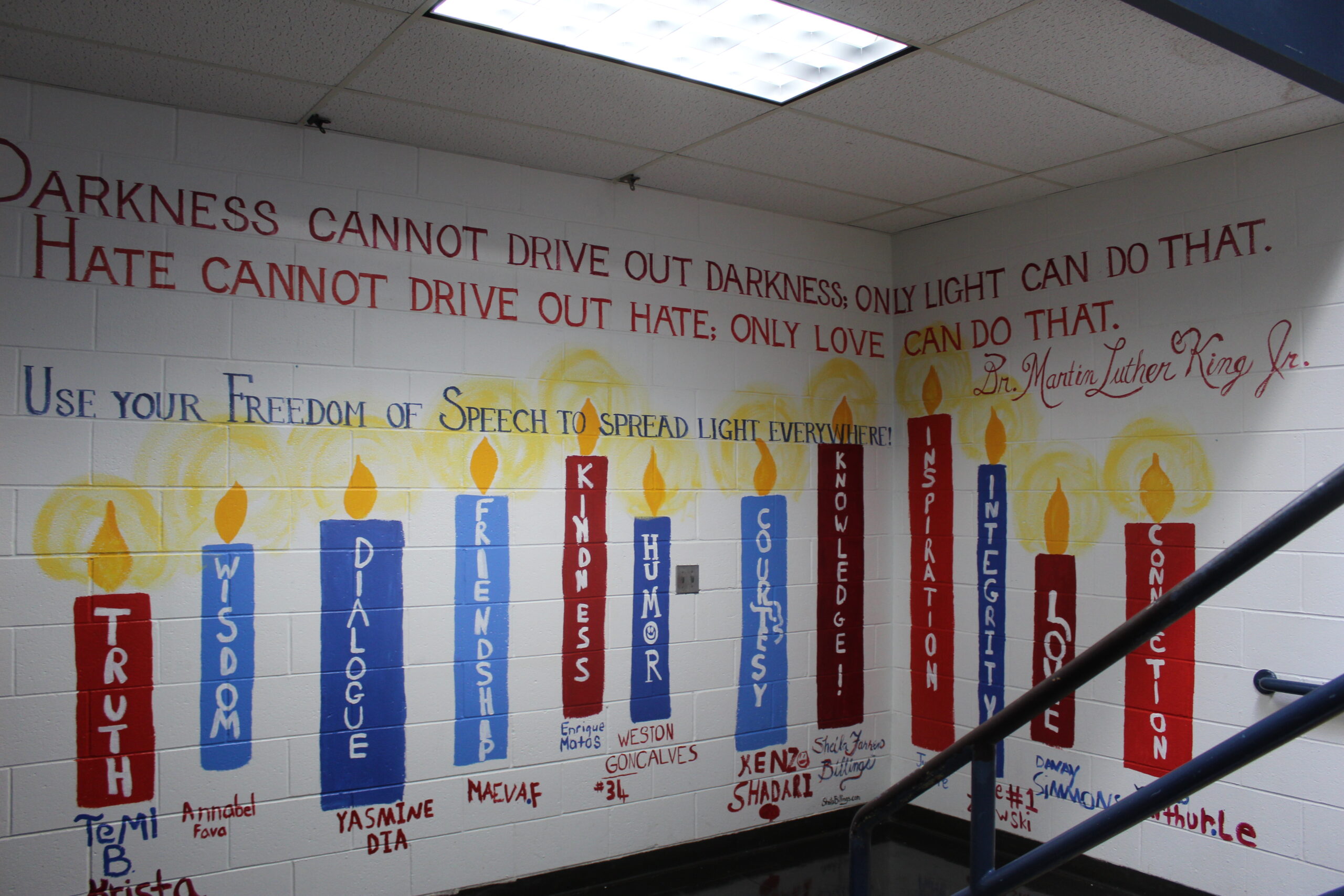
“I do feel like there has been an increase of racism at Swampscott High School, but there has also been an increase of policies in place to provide a safer environment for the students and faculty,” said student Enrique Matos. “As a community I feel we should come together and fight this problem head on because it is this town’s priority to focus on diversity, equity, inclusion and belonging. This town is a family and as a family we should solve problems together, because together we are stronger.”
Swampscott High School student Anya Severino said that she has not “experienced much racism from people here.”
Swampscott High School student Aiza Ashraf, however, believes there is still much more to be done.
“I’ve faced race-based comments this year by other students and peers,” said Ashraf. “I received different treatment from other teachers as well. It is mainly less attention drawn to colored students, while caucasian students attract more attention and manage to build a relationship with their teachers.”
Ashraf said she thinks there should be more school-wide discussion regarding racism.
“It’s been an issue, I don’t understand why the administration does nothing about it,” Ashraf said, adding that students of color are “tired of seeing that administration is barely making any changes or setting boundaries.”
Yet Temi Bailey, co-director of Swampscott’s METCO program and an advisor for the Room of Color and the Students of Color Association, said he doesn’t think there has been a drastic change from years past. Instead, Bailey suggested students of color are more comfortable to speak out about racism now than in previous years.
“In past years, kids didn’t want to bring attention to themselves or make a big deal about it,” said Bailey. “Being able to recognize that you have a voice and you shouldn’t let negative things happening slide. I love that they are speaking up.”
Bailey said that students speaking up and learning to advocate for themselves at a young age will help the problem in the long term.
“The mindset (of not speaking up) has allowed these things to add up over the years,” said Bailey.
Bailey said the school is making an attempt to eliminate racism from within its halls, but it will be a process that takes time.
“The school is making an attempt to fix issues as they arise,” said Bailey. “I’ve been part of some of those restorative conversations. They have brought about some resolution, but nothing can get fixed in a year. The school and students are trying.”
This school year, a student cabinet was established. The cabinet meets regularly with Zotto and Superintendent Jason Calichman to discuss whatever the students feel can be improved around the school, as well as what they think is going well.
“The goal is information sharing,” Zotto said. “To get a pulse of what has been actually happening from a student perspective.
Zotto said these open, direct lines of communication between students and administrators are crucial for both small problems and larger, prejudicial issues like racism.
“We want to develop a community that is inclusive and validating to everybody that steps into this building,” said Zotto. “It is really important that every student’s voice, and their families’ experience, is validated.”