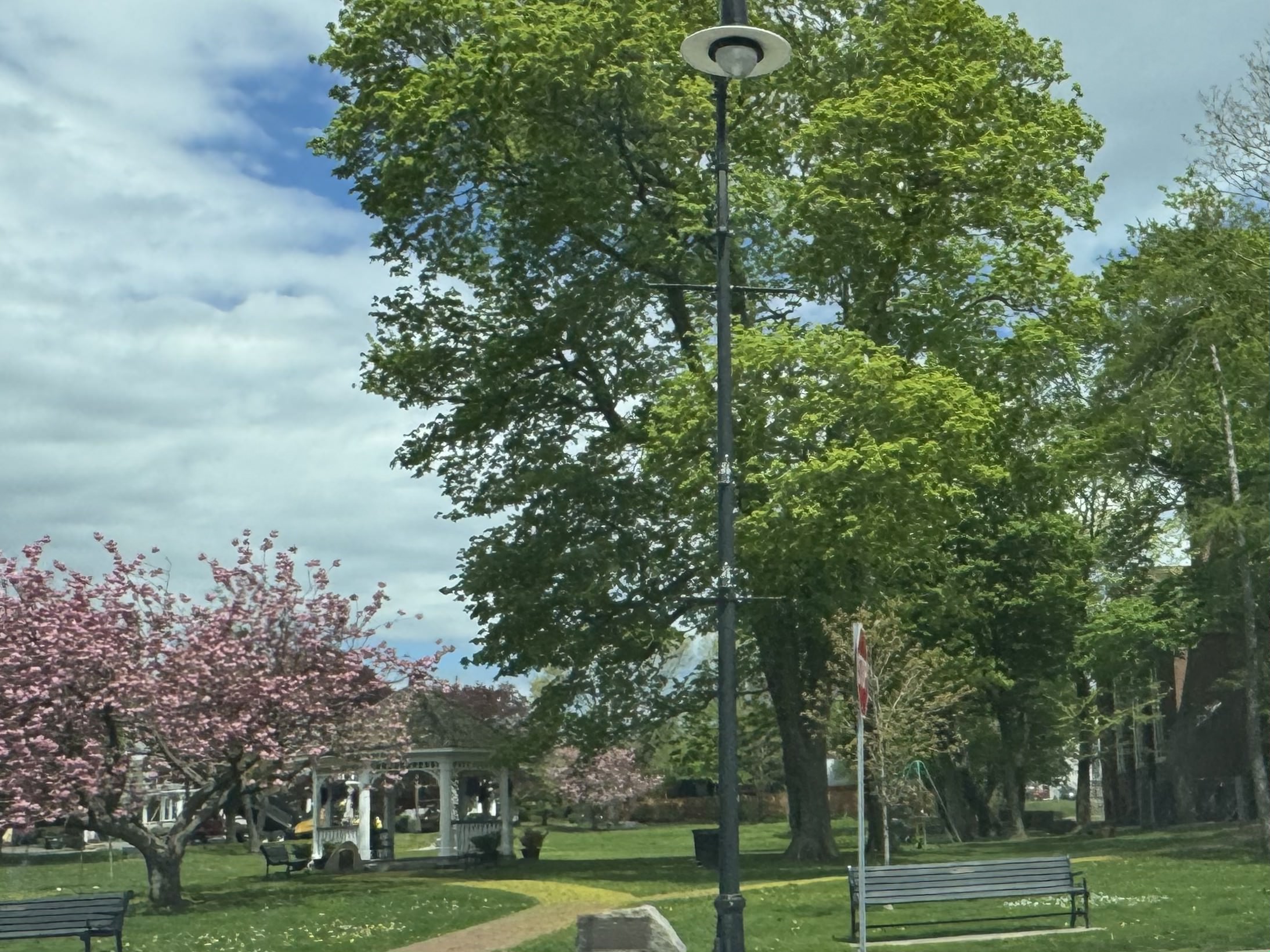
Swampscott has maintained its “Tree City USA” designation for 31 years, but like many towns nationwide, it is grappling with shrinking tree coverage.
“Swampscott is absolutely not alone,” said Jim Olivetti, town tree committee member.
Swampscott earned its “Tree City USA” status from the nonprofit Arbor Day Foundation and the Department of Conservation and Recreation Urban and Community Forestry Program. Any city or town can obtain the recognition, which requires a commitment to planting, maintaining, and managing tree resources.
To qualify, Swampscott must observe Arbor Day at the end of April, have a tree board, establish public tree policies and allocate at least $2 per capita annually to its annual community forestry budget.
A lot of the town’s support comes from the $95,201.40 Cool Corridors grant Swampscott received in April from the Executive Office of Energy and Environmental Affairs’ (EEA) division of conservation services. Community and Economic Development Director Marzi Galazka said the grant will support tree planting and maintenance efforts over the next two years.
Trees not only produce oxygen but they also reduce airborne particles and improve a community’s overall health. Access to trees and green spaces reduce stress, while canopy.org also reports urban landscapes can lower crime rates.
The greenery also acts as a natural air conditioner. One tree can provide the same cooling effect as ten room-sized air conditioners running for 20 hours a day.
In windier seasons, trees also can reduce residential heating costs by about 10%.
Swampscott has tried to reverse the decline and increase the climate gains by planting 52 new trees along walking routes as well as giving away over 400 trees within the past four years to residents to plant in their backyards.
But even with the commitment and plans for additional tree growth, Swampscott and towns across the US are losing their tree canopy coverage. Across the country, urban areas are losing approximately 175,000 acres of tree canopy each year, according to a recent study from Salem State University.
The Salem State University study, which has a 4% margin of error, noted that Swampscott has “both improved and lost foliage based on census blocks.” The highest amount of tree loss took place in the northeast coastal area of the town as well as the southwestern region that borders Lynn. Between 2016 and 2023, the town lost an estimated 56 acres of tree canopy, according to the study.
“Many cities and towns are facing this as you develop,” Olivetti said. “As you build more housing, what happens is you lose more tree canopy.”
In Swampscott, there are limited areas to plant additional trees on public properties due to the dense building population. Galazka noted that there has been some loss of trees in the town due to the new middle school.
But it’s “not strictly the development” either, she added. Galazka said loss of canopy can be caused by plant diseases, accidents and weather.
“So it seems to me the logical next step is to encourage people to plant trees on their own property,” Olivetti said, adding he recently added a plum tree to his backyard.
Suzanne Hale, a member of the town tree committee, said that “overwhelmingly” across the country the most amount of space to use and reforest is privately owned.
“Every town, certainly in southern New England, is facing this,” Olivetti said. “It’s just the way we’re developing as a civilization.”
As Swampscott confronts development and environmental challenges, town leaders hope the continued public and private cooperation could preserve the leafy legacy for years to come.
“The trees that we’re planting and the trees that we’re giving away in 20, 30, 40 years will be thriving,” Olivetti said. “If we don’t do it and people didn’t plant trees in their yards, or the town didn’t allocate money for trees, in 20, 30 years there’d be very little canopy left.”