For about half a dozen Swampscott High School students, it’s common practice to visit science teacher Brian Casey’s classroom, talk to someone from Germany, and return to the rest of their day.
“It’s fantastic,” said student Davit Movsesyan during the School Committee meeting Thursday. “You can spend hours of your time doing crazy stuff.”
The students are able to “build community” and connect with people across the world to “gain insight into their lives,” thanks to the ham radio club Casey started after a schoolwide show-and-tell-style event last year.
“We had a Commission for Fun Day…Students brought in things they like to do,” Casey said. “I brought in my ham radio, one of my portable set ups from home. I had five or six or seven students come up and make a couple of contacts.”
A ham radio operator — short for amateur radio operator — is a licensed hobbyist who uses government-allocated radio frequencies for non-commercial communication, experimentation, and emergency response.
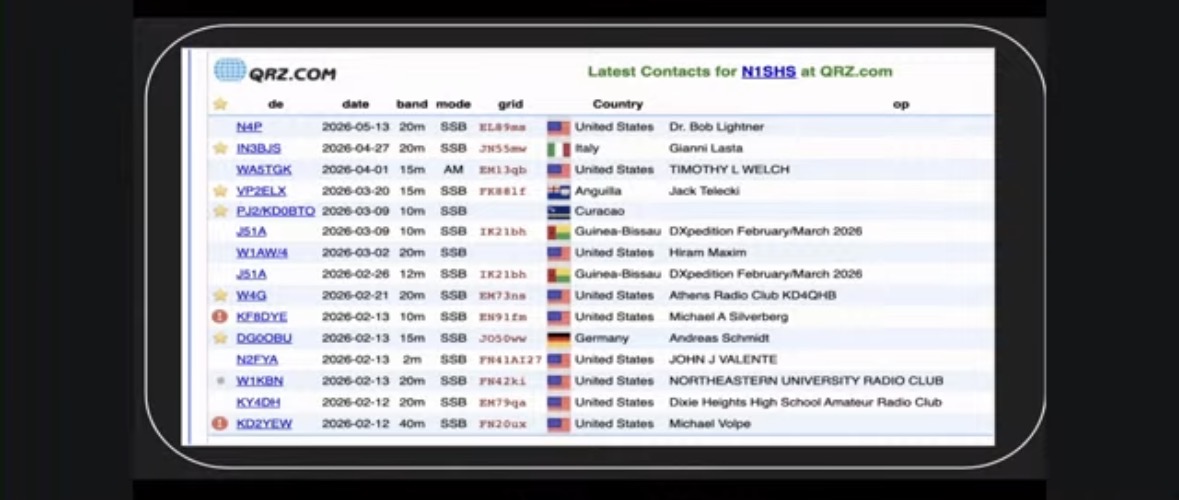
After students spoke with people in Germany last year, interest quickly grew in forming a club. In the fall of the 2025-26 school year, the group applied to the federal commission for a club license and also requested the vanity call sign N1SHS.
“We thought that was very fitting,” Casey said. “With our license, we have the ability to try new things, open up antennas, to adjust things, as long as we don’t cause interference with other operating services.”
The students now have two radios: one for global communication and another for more local use, though Casey said students have already connected with a radio operator in Connecticut using the local system. The equipment was donated by the American Radio Relay League and a Swampscott High School alumnus.
“They have a really good commitment to education,” Casey said, adding that the nearest high school with a similar ham radio program is in Hudson.
Casey told the School Committee his goals for the club include giving students opportunities to explore electronics, engage with STEM subjects, and train in emergency communications. Students are also learning how radios can assist during local emergencies and power outages.
The club has already connected with operators around the world, including in Germany and the Caribbean, Casey said. Students have also spoken with other high schoolers and participated in a weather station project by sharing their own data.
“There’s a lot of things we can do with amateur radio,” Casey said. “We’re looking forward to seeing this grow. I’m looking into how I can bring this into my classes possibly.”