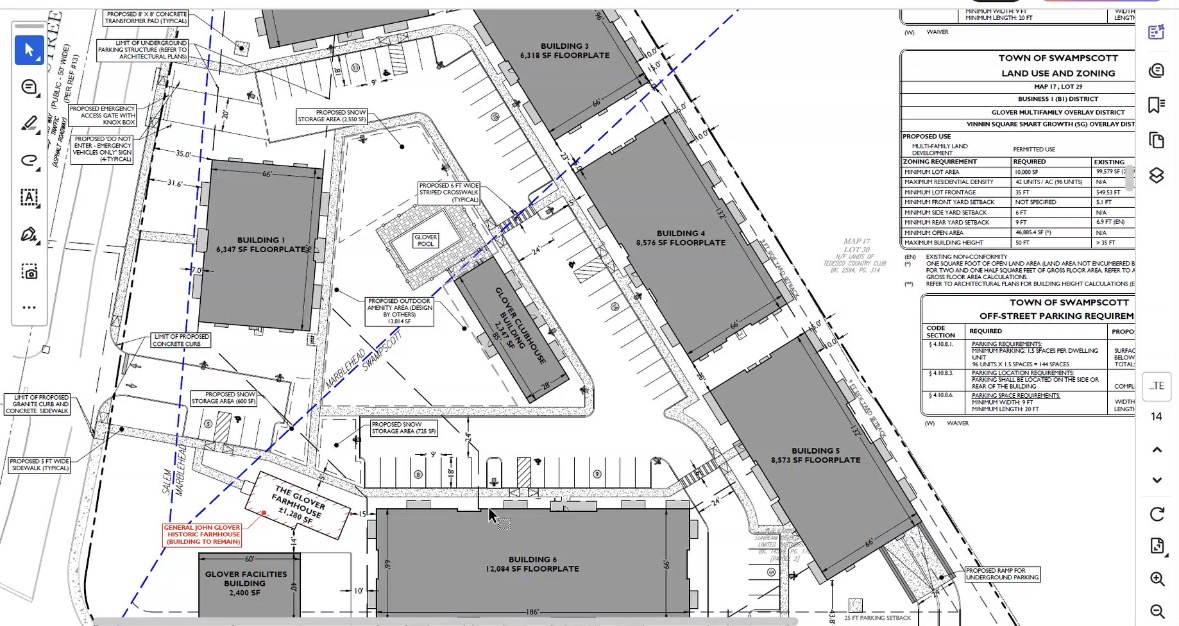
Fifty-one years ago this December 16, Henry Bedard was last seen alive walking on Paradise Road after Christmas shopping in Vinnin Square. A day later, the teen’s body was discovered in the woods off Suffolk Avenue in Swampscott, behind what is now the Department of Public Works (DPW) building on Paradise Road.
Bedard, who was murdered in December 1974 at age 15, was found beaten to death with a baseball bat. No arrests were ever made, but the investigation remains active, according to the Office of Essex County District Attorney Paul F. Tucker.
His family lived in Lynn until Henry was 11, but they returned to Swampscott, where his parents Gloria and Henry Sr. had attended high school. Bedard attended the Machon School before enrolling at Swampscott High School.
“Everyone is friends when you grow up in Swampscott, but Henry lived right up the street. Henry was everyone’s friend. A very easy going, polite, likeable kid from a nice family. Typical Swampscott,” Dan Dandreo told the Swampscott Tides.
Bedard was widely known throughout the Swampscott community and loved spending time with his friends and family, many have said.
“Henry enjoyed playing youth baseball and Big Blue football at Swampscott High School and worked at his father’s service station on High Street in Danvers,” the Essex County District Attorney’s Office told the Swampscott Tides.
On December 16, 1974, Henry walked his younger brother to the junior high school before heading to Swampscott High School, where he was a sophomore. After the bell rang, Henry caught a bus to Vinnin Square and stopped at CVS to drop off a roll of 8mm film. He also bought perfume as a Christmas gift for his sister.
Henry left CVS around 3 p.m., heading down Paradise Road. Former Swampscott Police Lt. Peter Cassidy later said he waved to Henry as he passed.
The 15-year-old crossed through the Department of Public Works lot, wished the workers a Merry Christmas, and showed them the CVS bag, saying he planned to wrap the gift at home. He continued to the back of the lot, where the woods begin.
He never returned home.
Between 4 and 4:30 p.m., two boys on their way to a friend’s birthday party found an empty wallet and the perfume Henry had purchased, later taken as a potential suggestion that Henry may have already been killed by that time.
In a 2015 article, Cheryl Paradise-Armas recalled coming home from school in Boston and feeling “a strange silence around the house.” Her father told her, “Your brother has been shot in the head. He’s dead.”
“My reaction was to cry out in anguish like an animal that had just been seriously wounded, a piercing, frightening cry that still resonates in my head when my mind wanders back to that dreadful day,” Paradise-Armas wrote. “My legs buckled underneath me, and I fell into my father’s arms.”
The family later learned that Henry had not been shot, but beaten to death with a baseball bat.
Two boys had followed a trail behind the houses on Norfolk Avenue when they discovered Henry’s body in a shallow grave, covered in leaves and soaked with rain and blood. Following an autopsy, former Essex County Medical Examiner Dr. Albert Shub reported that Henry had been struck at least five times with a blunt object.
Police believed the murder weapon was a baseball bat found near Henry’s body, a Henry Hank Aaron 125LL model. A series of lines were carved into the knob, possibly indicating the Roman numeral VI or resembling the letter “K.” In 1975, former State Police Detective Lt. Alfred Duemling stated that despite contacting numerous Little League officials, police were unable to determine who owned the bat.
Forensic analysis confirmed the bat was stained with human blood. However, this was before DNA testing was widely available, and former Swampscott Police Chief William Carlin said state police were unable to determine the blood type.
The bat was later sent to the FBI, but they too were unable to determine the blood type at the time.
Police did manage to lift partial fingerprints from the bat, but they couldn’t compare them to Henry’s, as his prints were not on file and he had already been buried.
“I think I remember the night he was missing people were calling around trying to find him, figuring he was at someone’s house,” Dandreo said, adding that after Bedard’s body was found it “made taking short cuts out of bounds and wondering if the killer was with us still.” “Anything can happen anywhere at any time, no matter how safe you think you are or the community you live in. It happened here.”
Carlin was vocal from the beginning of the investigation that he believed Henry was killed by someone he knew. About a month after the murder, the investigation team reinterviewed about 50 people, and nine were administered polygraph tests. All passed.
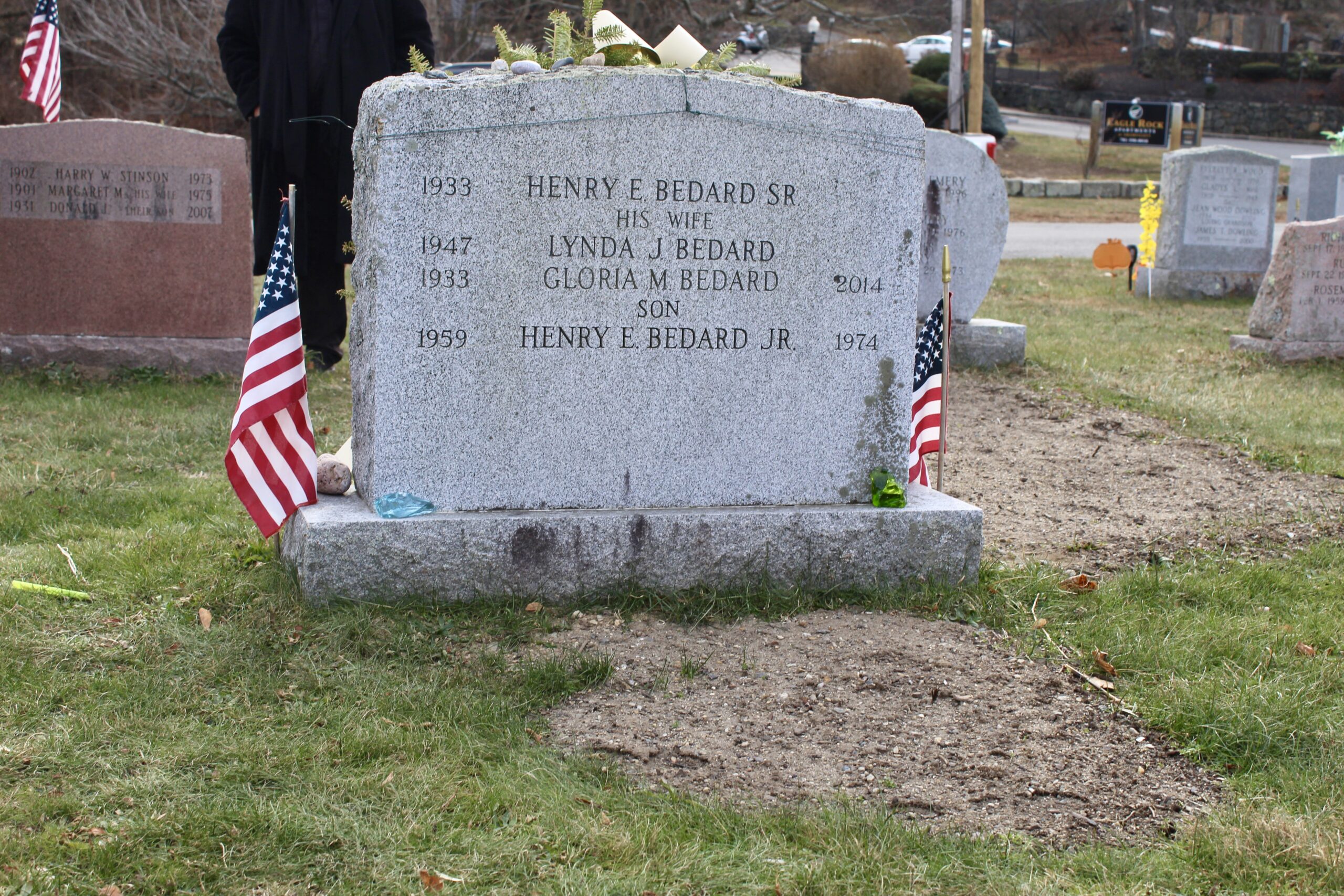
Most recently, in October, in response to information received, a court order was allowed to exhume Bedard’s body.
“Advances in forensic science and technology have led to new criminal investigative avenues that were not possible in the past,” said Tucker. “We are hopeful that these advances will lead to significant evidence.”
The Swampscott Police Department, Massachusetts State Police (MSP) unresolved cases unit assigned to Tucker’s office, MSP crime scene services section, and the Office of the Chief Medical Examiner oversaw the exhumation.
“What happened to Henry has never left this town, and young or old, all of the community still talks about Henry and what happened on that fateful day,” said Swampscott Chief of Police Ruben Quesada.
Anyone with information about Bedard’s murder is encouraged to contact the Unresolved Case Unit tip line at 1-855-MA-SOLVE or at mspunresolved@pol.state.ma.us.