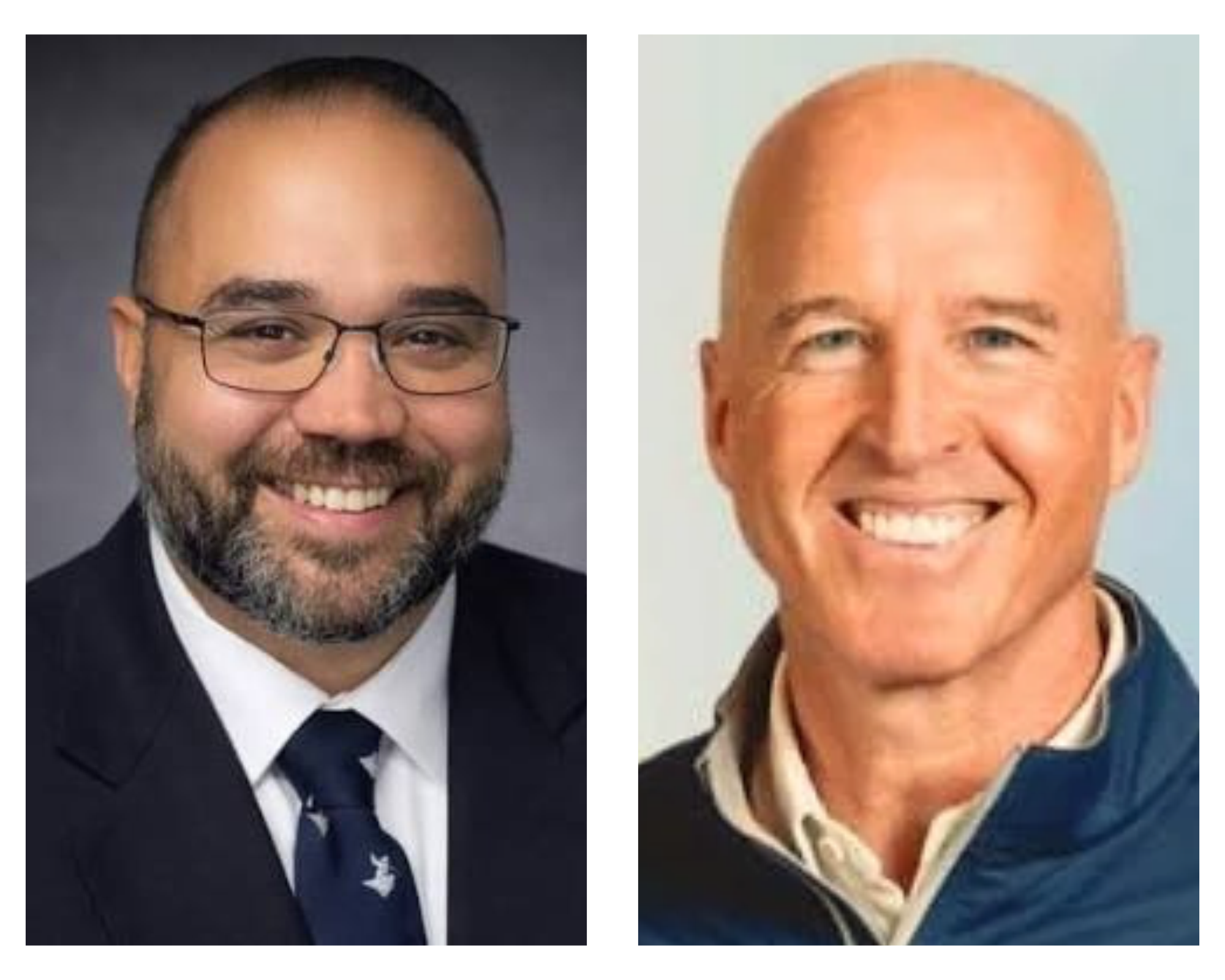
On October 29 at Swampscott Middle School, Wes Geraci stood on the roof and threw pumpkins off as a way to test his students’ work in physics, engineering, collaboration, and problem-solving.
Students in Geraci’s robotics class were tasked with building, testing, and revising designs to reduce the impact force on the pumpkins and keep them from smashing on the asphalt. They programmed micro:bits to test whether a pumpkin could land safely, then applied those findings to real-life designs.
“I want them to be able to see the computer programming and the code come to life,” Geraci said. “I like to have this class with a mindset around problem solving.”
Geraci’s class is part of the broader innovation work at Swampscott Middle School. Beyond the catapults, students build remote-control cars, wearable tech, step counters, and other circuit-based projects. They also learn to rebuild and revise their designs after “failures.”
Students take robotics, engineering, and digital literacy courses in middle school. These “special” courses focus heavily on project-based learning, especially since they see students in 25-day cycles. This structure allows students to become fully immersed in different elements of coding and technology while exploring a wide range of interests.
“We can make magic happen in this school…All of these classes are fundamentally the computer science principles, but they’re disguised,” said Lytania Mackey, the district’s director of technology, digital learning, and innovation. “You’re not just reading about it. It’s knowledge creation and then application. It’s altogether in these programs as a school. It’s exactly what schools should be.”
When Natalie Poverchuck, the technology specialist at the middle school, started teaching 19 years ago, she said the work “was strictly Word, Docs. It was very stagnant.”
“Over the years, I’ve been trying to find more and more ways to do hands-on, interactive activities because that’s what students respond to,” Poverchuck said.
She began with the CS Engage Grant, enrolling in a program focused on coding and hands-on interactive learning.

“Students respond really well to hands-on learning,” Poverchuck said. “It seems kind of silly almost in a computer class that we’re taking them off computers, but finding ways that they can create something and then bring it back to using it on a computer, helps create more connections.”
Poverchuck now works with students to “build up” from their foundational knowledge using the Makey Makey, which allows students to design their own controllers using everyday conductive materials to create circuits that mimic a keyboard or mouse. The department has also received grants to purchase Code-a-Key backpacks, which enable a micro:bit to trigger different keys and mouse controls.
While the Code-a-Key backpacks will be used more next year, Poverchuck said they will allow for more “vertical learning.”
In her seventh-grade class, students created custom controllers to navigate obstacles in the game Geometry Dash. Others coded their own Scratch games to work with the Makey Makey.
These skills translate into students’ futures as well, Poverchuck said. There are more opportunities in high school, and even further in college or careers. Technology and engineering classes also help “develop critical thinking skills in more interdisciplinary ways,” she added.
Geraci said students who arrive from the innovation lab in the elementary school are already more comfortable and familiar with the vocabulary and ways of thinking. And when other classes — such as math or history — start using technology in new ways, it integrates the learning more effectively for students.
“Each year I want to be able to revise and reiterate my curriculum to keep in time with what’s going on, like in eighth grade, we talk about artificial intelligence,” Poverchuck said. “I think any way that we can incorporate more current learning that uses as many different tools and resources that we have available to us, the better. It’s better for the kids. We’re just really lucky that we have the ability to have students go through all these different kinds of pathways within our specialist program because every kid might find something that they like.”