By Stephanie Moreau
The image of a fisherman steering his boat symbolizes the past, present and future of the town of Swampscott.
The symbol lives on the town seal, which depicts local fisherman Capt. James Phillips at the tiller of his fishing schooner, Dove. It’s a reminder of how deeply fishing is woven into Swampscott’s identity.
But the industry that helped define the seaside town is slowly slipping away.
For Mike Gambale, who has worked as a full-time commercial fisherman since 1976, the problem is visible every time the tide drops.
Gambale has seen firsthand the damage fishermen’s boats face at low tide.
“He was waiting for the tide to come in because his boat was laying on its side,” Gambale said, describing a local fisherman whose boat became trapped at low tide.
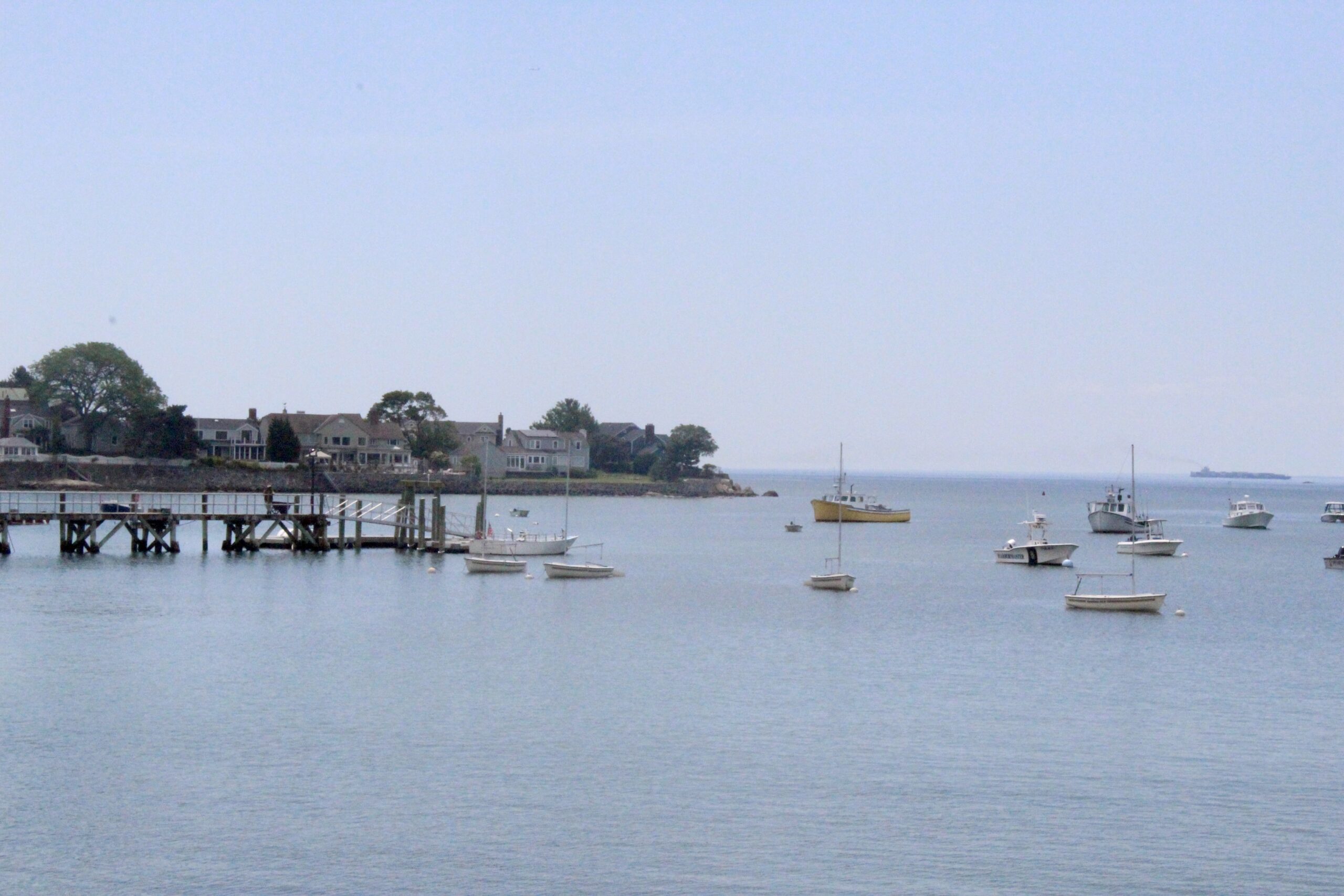
Sand from the nearby Lynn Beach is gradually washing into Swampscott Harbor, making the water too shallow for many commercial boats. At low tide, some vessels risk hitting the bottom while moored.
“Their boats oftentimes bottom out from where they are in the harbor at a super low tide,” said Ted Dooley, chair of the Harbor and Waterfront Advisory Committee and rear commodore of the Yacht Club.
Dredging – the removal of sediment and debris from the bottom of the harbor – is typically the solution to this kind of problem. According to the National Oceanic and Atmospheric Administration, dredging clears accumulated debris and sand to restore safe water depth.
Unfortunately for Swampscott, the fix is complicated.
Swampscott’s waters are home to a species known as eelgrass, a marine plant that is one of nature’s most valuable habitats.
Because eelgrass is heavily protected, dredging is largely restricted.
The shallow water has already reduced the number of working fishing boats in the town.
John Ingalls, a Swampscott native and rod-and-reel fisherman, remembers when the harbor was far busier.
“Growing up, there had to be a fleet of 40 of us there, and now it’s just dwindled down because a lot of them have to leave because of the size of their boats,” said Ingalls.

Environmental regulations have created additional challenges.
Massachusetts is one of just a few states that closes certain waters to fishing because of the presence of endangered whales. To help offset the financial losses, State Sen. Patrick O’Connor proposed the Lobster Closure Mitigation Fund (Senate Bill 68), which would offer lobstermen financial assistance with $1 per trap tag per week while state waters are closed from January 1 through June 30.
The bill has not yet passed.
Meanwhile, fishermen like Ingalls are limited to fishing a few days each week.
“Through the summer months, the bag limit is smaller, and the quote is getting smaller and smaller, so it makes it more and more difficult,” said Ingalls – who is a direct ancestor of Francis Ingalls who founded Swampscott in 1629, and his family has been here ever since, welcoming its 13th generation this year.
Even after fishermen return to shore, another challenge awaits: there is no viable place in town to sell their catch.
“Once they bring their catch ashore, they have to take it somewhere else to sell it because there’s not a viable way to sell fish on the dock in Swampscott,” said Richard Smith, chair of the Historical District Commission.
To continue with their livelihood, some fishermen, according to Gambale, are finding backup plans like becoming plumbers or getting their electrical licences. Others are choosing to move to different harbors, such as Marblehead, where fishermen have access to ice, electricity, food, and repairs — services that Swampscott currently cannot offer.
“I think the people who are here are probably mostly Swampscott people, maybe been there for generations, and just hate to give up being here. But I think a fisherman just starting out is probably going to gravitate to one of the larger places,” Smith said.
To Smith’s point, Gambale shared the story of a young fisherman who, due to the size of his boat, and the lack of water, is unable to keep it in Swampscott.
“He has been forced to move his home base to Beverly,” Gambale said.
When asked what he would like to see for Swampscott’s fishing community, Gambale was quick to answer.
“Dredging would be a dream, and I would support 100 percent to do whatever I had to do to make that happen,” he said.
Despite the obstacles, Swampscott’s fishermen are seemingly not giving up hope. Fishing is so deeply ingrained in Swampscott’s history, making it hard to think about one without the other.
Deeper water and basic waterfront facilities are the top needs of the fishing community, and according to Gambale, if both became available, Swampscott’s fishing community may just spring back to life.
“Some would come back. I know some would come back. And you’d probably have some new growth,” said Gambale.
But preserving the heritage will require a broader community conversation.
“It’s absolutely crucial and vital that the community has that conversation,” Dooley said.
Stephanie Moreau is a student at Endicott College studying journalism. This story was published in partnership with the Massachusetts News Service.