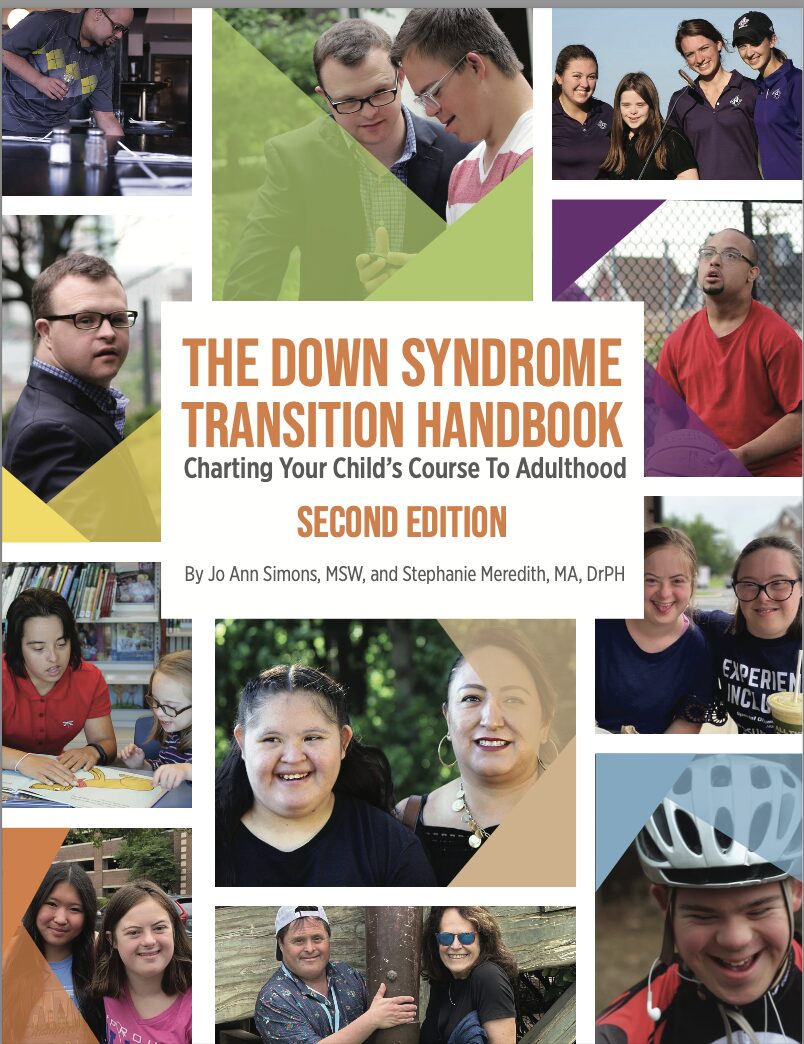
Swampscott resident Jo Ann Simons has released an updated edition of her book The Down Syndrome Transition Handbook: Charting Your Child’s Course to Adulthood to help families access supports, set transition goals and navigate education.
Simons serves as president and CEO of Northeast Arc, a nonprofit that helps children and adults with disabilities and autism fully participate in their communities. For the revised edition, Simons collaborated with Stephanie Meredith, who holds a doctorate in public health with a focus on disability and health. The book addresses a wide range of topics to help families and support networks navigate the transition to adult care
“The book has been used by not only families with children with Down syndrome, educators, families with children with autism,” Simons said. “The book has checklists and things that families should be doing at every stage of transition, which starts at 22 in most states when students age out of the special education system.”
Simons changed her career path after the birth of her son, Jonathan, who was diagnosed with Down syndrome and heart defects. She redirected her life’s work toward advocating for the rights of her son and others with disabilities. She wrote articles and spoke at different events, particularly on the aging process and caring for people with disabilities.
“When I wrote the book, there was nothing all in one place. Transition hadn’t become the industry that it is now,” Simons said.
She originally published the book in 2010 with Woodbine House to cover issues from accessing education support to building communities and applying for adult services like Medicaid and Supplemental Security Income.
Supported in part by Marblehead philanthropist Steven Rosenthal, the updated edition includes new stories and expanded sections on federal policy changes and technology. About a third of the book had changed from its original publication, Simons said.
“So much has changed in 2010,” Simons said. “I thought this was a great time since so much has changed in the areas of not only eligibility or financial issues but more notably on the opportunities for people with intellectual disabilities, including Down syndrome and autism, have radically improved, and the introduction and widespread use of technology.”
The book provides historical context, noting in one chapter that people with Down syndrome once lived primarily with relatives or in large state-run institutions. Today adults with Down syndrome live in a variety of settings and the book walks the reader through the options and what may be best for each individual case.
In terms of finances, the book walks the readers through the “complicated area of benefits” and what the possible funding sources are for a person with Down syndrome.
It also offers guidance on building independence, advocacy, health and well-being, and safe use of technology. The book is also sprinkled with individual stories and “case studies” that can engage the reader and explore different scenarios.
Simons told the Swampscott Tides that she hopes the book is able to help people form a vision and more of a concrete understanding of what independence for those they care for can look like.
“It’s very conversational in nature. If you read the book, you’re going to feel like you’re just talking to Stephanie and me,” Simons said. “The idea is that you can refer to it over time as things change, as your child is looking for employment or looking for housing or looking for social opportunities.”
The book is free. To download the book, go to downsyndrometransition.com. Readers will be asked to provide a few details so they can receive occasional updates and download numbers can be reported to funders as needed.
“It’s a gift to the community,” Simons said.