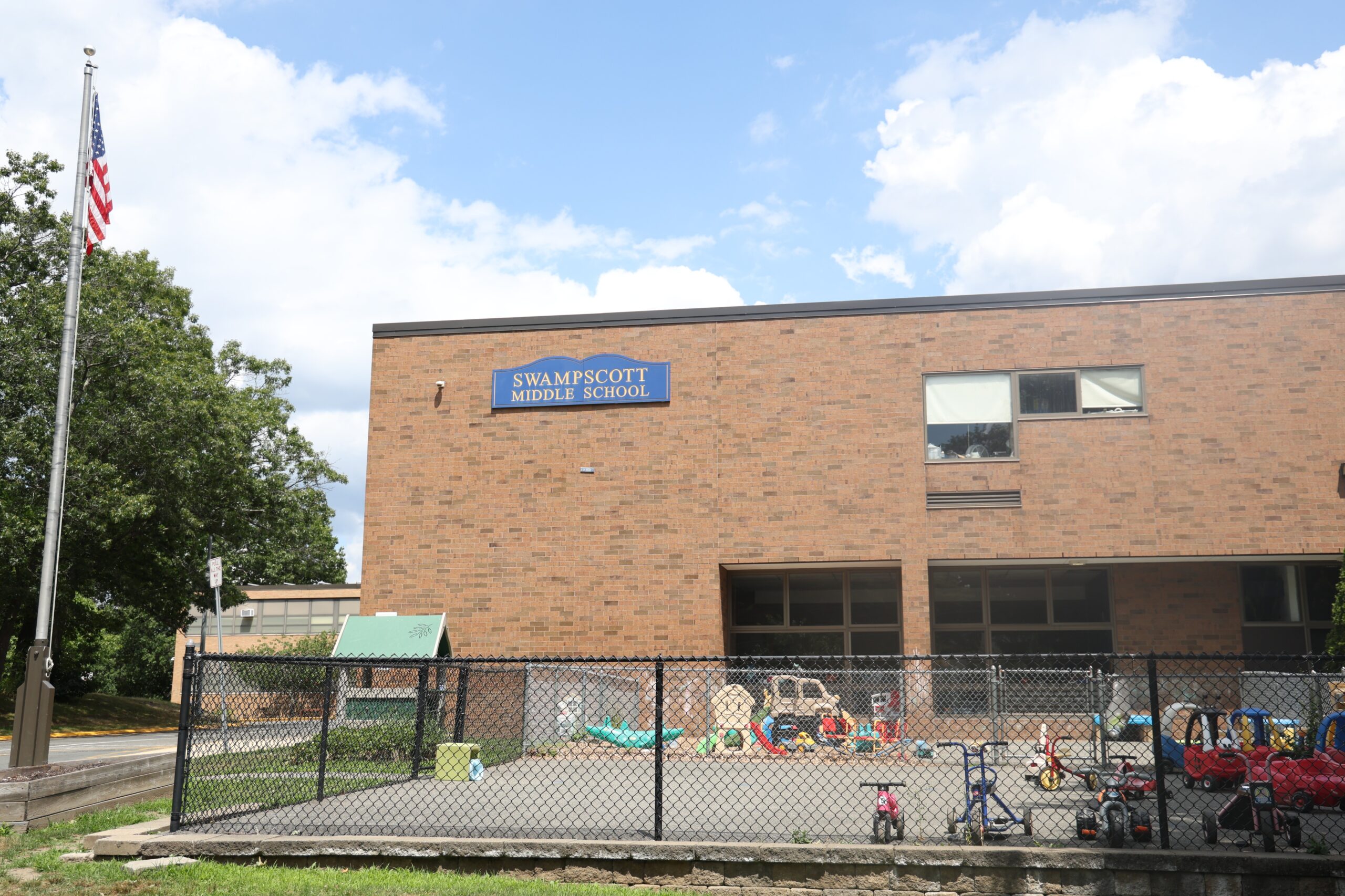
The Swampscott School Committee members entertained the idea of submitting a statement of interest to the state for funding of renovations to the Swampscott Middle School in the near future.
At a School Committee meeting on Thursday, February 5, Swampscott Public Schools Facilities Director Max Kasper laid out two potential paths for the district to take regarding much needed upgrades to the middle school. The most problematic systems at the school are HVAC, electrical services, security and the lack of a fire protection system, according to Kasper.
“Many systems at SMS are in very poor condition and need to be on track for replacement to avoid catastrophic failure and undesirable situations,” read a slide of Kasper’s presentation to the School Committee.
These projects would be funded by the town.
One path, which was favored by the School Committee, would seek funding from the Massachusetts School Building Authority (MSBA) for one major renovation project.
The second path would call for fragmented, smaller projects to fix needed areas of improvement in the school one after another. Kasper said this option would be highly disruptive for many years, and students would still be left with a substandard educational environment.
“We have classrooms where half of the outlets aren’t working,” said Kasper. “We had space heaters in one classroom because we couldn’t get the heat over 60 degrees on the coldest days last week.”
In order to receive funding for a project from the state, the district will need to submit a statement of interest for the project to the MSBA. Then, the MSBA would decide whether or not to select the project for funding. Superintendent Jason Calichman said the MSBA would decide if repairs would be made, or if a whole new school would be built if the district’s submission was chosen.
In the current MBSA cycle, statement of interest submissions need to be submitted by April 17.
“We really need to get an idea of where the board falls and what your opinions are,” said Calichman.
The submission of a statement of interest must be approved by both the School Committee and Select Board.
“When you look at the two options…to me there’s no choice. It’s a no-brainer to go with scenario one,” said Calichman.
School Committee Members seemed to agree with Calichman.
“I would vote for option one in a heartbeat, but we need to be really realistic on if the town has the financial capacity and we know times are tough right now,” said School Committee Member Suzanne Wright. “We can’t afford to get into this program and not follow through.”
School Committee Chair Glenn Paster echoed the sentiment that option one is a no-brainer, but urged Kasper to collaborate with the Finance Committee to ensure now is the right time to start the process.
“I’m wholeheartedly for number one,” said Paster.
At a Capital Improvement Committee meeting also on February 5, Town Administrator Nicholas Conners presented a five-year plan for improvements through the 2031 fiscal year. Listed was a $100 million placeholder for middle school renovations in the 2029 fiscal year.