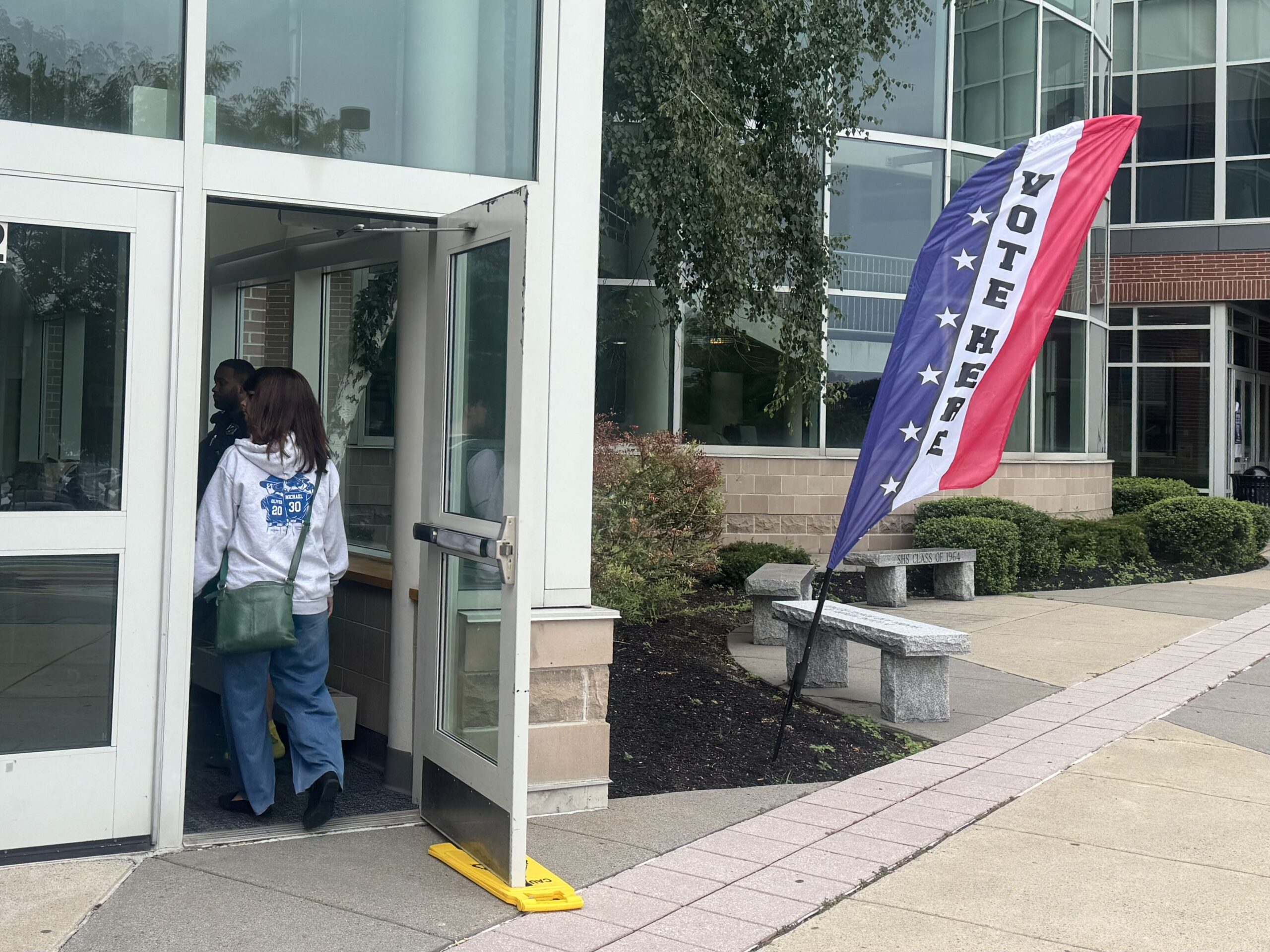
Swampscott resident Harriet Wallen said she always votes in the primaries. She’s also at the polls for every federal and state election.
Local elections, however, are another story.
“To be honest I don’t know much of what’s going on in town,” Wallen said.
That disconnect shows up in the numbers. Just 14.39% of Swampscott voters turned out for April’s local election. By 6 p.m. Tuesday, 26% of eligible voters had already cast ballots in the state primary.
The national glitz — and money — are hard to miss throughout the election cycle, from campaign ads to coverage by national news outlets. Coverage of the Massachusetts Senate race between Sen. Ed Markey and Rep. Seth Moulton even reached The New York Times on Monday, which framed the contest over transgender athletes as well as part of “a generational fight.”
The race is also hard to miss on television and social media.
Markey’s campaign committee has disbursed about $8.35 million overall, with around $7.84 million going toward total operating expenditures for the 2025-26 cycle, according to the Federal Election Commission (FEC). His campaign has launched statewide television and digital ads featuring endorsements from high-profile Democrats, including Sens. Elizabeth Warren and Bernie Sanders.
Moulton’s committee reported spending $6,228,105.21 in total disbursements through mid-2026, according to the FEC. Media tracking data from AdImpact shows Moulton and his supporting groups outspent Markey on advertising during the primary, spending roughly twice as much on the airwaves.
That disparity may help explain why Tom Whittam told the Swampscott Tides he was “more aware of the congressional race and the seats up” than he was of April’s local town election. The most any candidate spent in that election was $3,020.44, by now-Select Board Member Ted Dooley, who reported spending the money on a campaign kickoff event, website, lawn signs, bumper magnets and palm cards. Dooley also reported spending on mailings, Facebook and Instagram advertising, banners and an intern.
“There’s more advertising and money,” said Whittam, who did not vote in April.
Clusters of campaign volunteers stood outside the polls for Moulton, as well as candidates running for the 6th Congressional District seat he is leaving. The posters were distributed without requiring donations, and the campaigners were all volunteers.
“Sometimes I don’t know the local candidates that well,” said Michelle Tourgee, who did vote in April but said she needed to do more research ahead of time than for Tuesday’s primaries.
Debra Marcus and Olivia Morris told the Swampscott Tides they did not vote in April because, as Morris put it, “we weren’t aware of it.” They both agreed they were “better informed” and “more excited” about specific people on the ballot this time around.
Whittam, Marcus, Morris and Wallen were not alone in skipping the local election. Just 14.39% of Swampscott voters turned out in April. That was surpassed by 10 a.m. during Tuesday’s primary election. By 6 p.m. Tuesday, 26% of eligible voters had already cast their ballots, with two hours remaining before the polls closed at the high school.
“It’s all equally important,” said Town Clerk Katie Dupont. “It’s all guessing games…Every community is different. I’m just so excited with the voter turnout.”
Dupont is also exploring ways to increase voter turnout. She’s looking at Saturday elections in other towns and comparing their turnout with Swampscott’s. Dupont plans to present her findings to the Select Board.
“I didn’t even know about it,” said Steve Landory about the April election. “I’m not on social media at all so nothing reminded me.”