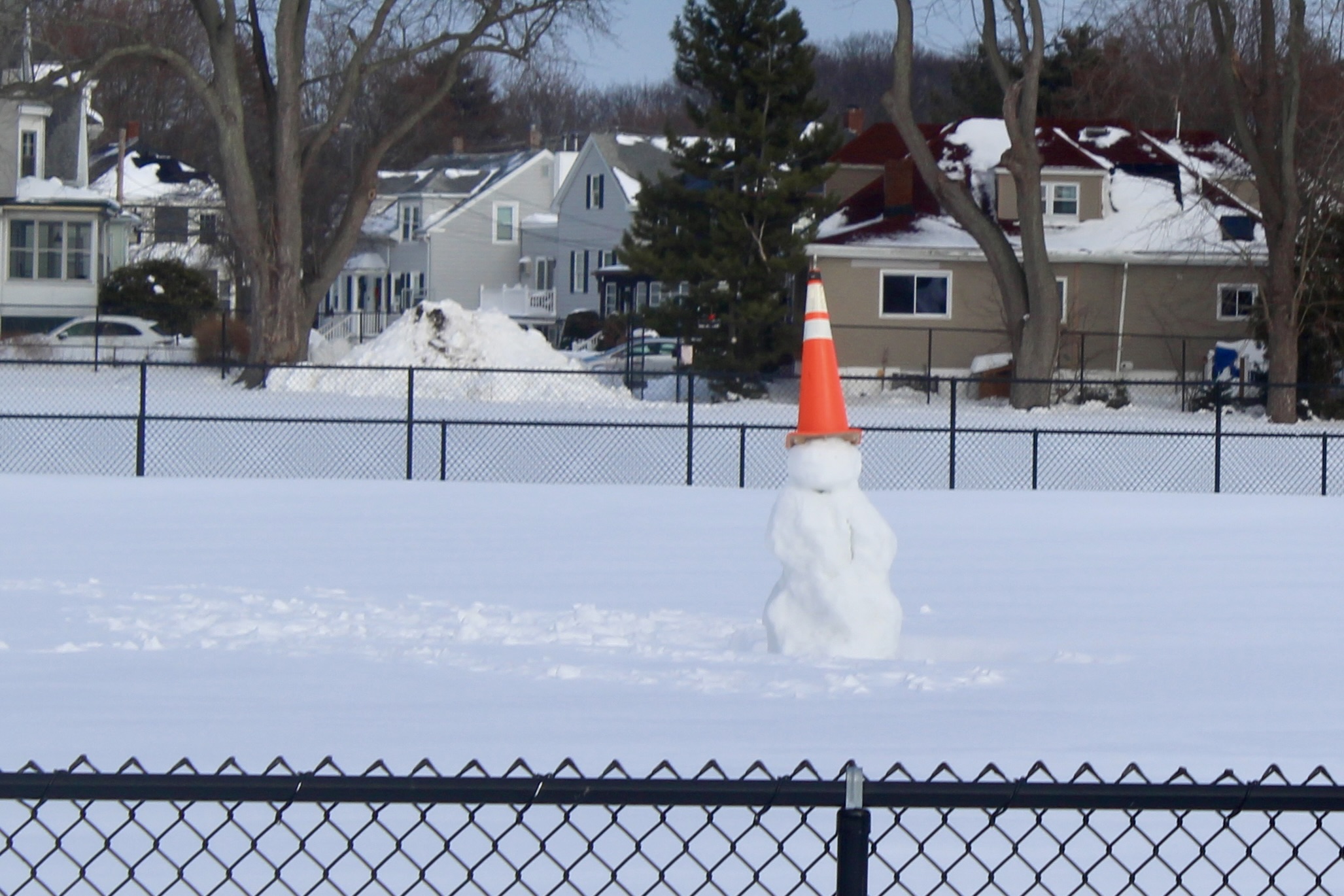
Snow has hit New England hard this year, with Swampscott receiving at least three feet in total. The additional precipitation has left ice and snow on the roads, creating unsafe driving conditions.
Sergeant Brendan Reen told the Swampscott Tides that the town has seen nine car crashes related to winter storms in the past two months.
“Thankfully, I’m happy to report that we haven’t had any motor vehicle crashes this year with any sort of reportable personal injuries,” Reen said.
Reen’s data comes from the “snow incidents” on January 4, January 18-19, January 25-27, February 6-7 and February 22-24. No crashes were reported to police on January 4, when Swampscott received less than one to three inches of snow, according to Reen.
Police categorize crashes in several ways. A minor fender bender is classified as an “accident under $1,000 of damage.”
“The office would simply help the parties exchange their information and explain to them how they go about filing their crash reports,” Reen said.
Incidents involving more significant damage are labeled “motor vehicle accidents.”
On January 18 to 19, there were three motor vehicle crashes. The February 6 to 7 storm saw six crashes, and the February 22 to 24 storm had three, which “can include an accident under $1,000 on that particular storm but it can also include accidents of over $1,000 and some of them could be a motor vehicle hit and run.”
“We sometimes respond to a complaint where a person comes out and finds their car was hit in the snow but the person took off and didn’t leave their information,” Reen said.
Reen also said the DPW’s work not only of plowing the roads but also initiating parking bans helps eliminate the risks. He said “good compliance” with the bans helps to ‘offset and minimize” any crashes. There were four parking bans initiated in February.
“I think the town’s DPW does an excellent job with the snow ban,” Reen said. “If there’s a winter parking ban or a snow ban, all vehicles must be off the streets by a certain period of time. Some people view it as a burden, however, the real purpose behind it is if we get compliance with people keeping their vehicles off the roads due to the parking ban, it helps keep the roads clear so the DPW and the crews can safely clear those roads, and I think that contributes to minimizing crashes.”
The Swampscott Police Department responded to 32 snow parking violations, with 25 of them taking place during the February 6 to 7 storm.
“It also helps to think if the parking ban was put into place well in advance because we have a good forecast that’s reliable and we know there’s pending snow, it allows us to get ahead of that and I think there’s a lower number of instances where motor vehicles would be parked on the street,” Reen said. “And if there’s vehicles parked on the street, sometimes cars that are sliding around either hit into those parked cars or the parked cars that are parked in violation, they make it difficult for the regular motoring public to try and get around and that might also cause crashes.”
And while Reen said he hopes “we’re beyond the big snow storms,” he still warned that when there is an advisory that residents should stay home.
“We really appreciate that. Even as a police officer driving around in the most recent storm, it was white out conditions and you couldn’t see probably 30 feet in front of you if you were going too fast,” Reen said. “We want to advise people, especially when they’re driving in difficult conditions, to keep your seat belt on. Drive within your limits. If there’s precipitation in the air – if there’s snow falling, sleet, or rain – you’re required to put your headlights on. Headlights are not only helping to illuminate the road in front of you but you’re letting other vehicles know where you are.”