Earth Day is Wednesday, April 22, and Swampscott leaders say the town is environmentally strong but still has progress to make.
“I think that not only the town but the whole country has a lot to do environmentally,” said Toni Bandrowicz, the chair of the Swampscott Conservation Commission. “I think of Earth Day as sort of a unifying force…that we can all individually take actions that help protect the planet…I think the town is on the right path, of course an obstacle for our town and other communities is going to be money.”
The annual commemoration promotes environmental protection. Earth Day was first held in 1970 after peace activist John McConnell had proposed a day to honor the Earth at a UNESCO conference and former Sen. Gaylord Nelson (D-Wisconsin) proposed it as a teach-in day.
The theme for Earth Day 2026 is “Our Power, Our Planet.” EarthDay,org is encouraging collective action, community mobilization and the transition to renewable energy. This year’s theme highlights the power of individuals, not just political and corporate leadership.
“Behind the theme is a recognition that environmental stewardship has never depended on a single administration, institution or election but is ‘sustained by the daily decisions of communities, educators, workers, innovators and families who understand that protecting the places they live and work is both a responsibility and a long-term investment,’,” Bandrowicz said. “Thus, ‘Our Power, Our Planet’ reflects on a fundamental truth that transcends political cycles. It is a commitment to stewardship, resilience and shared accountability – a call for every individual, community and sector to exercise their power in service of the planet we all depend on.”
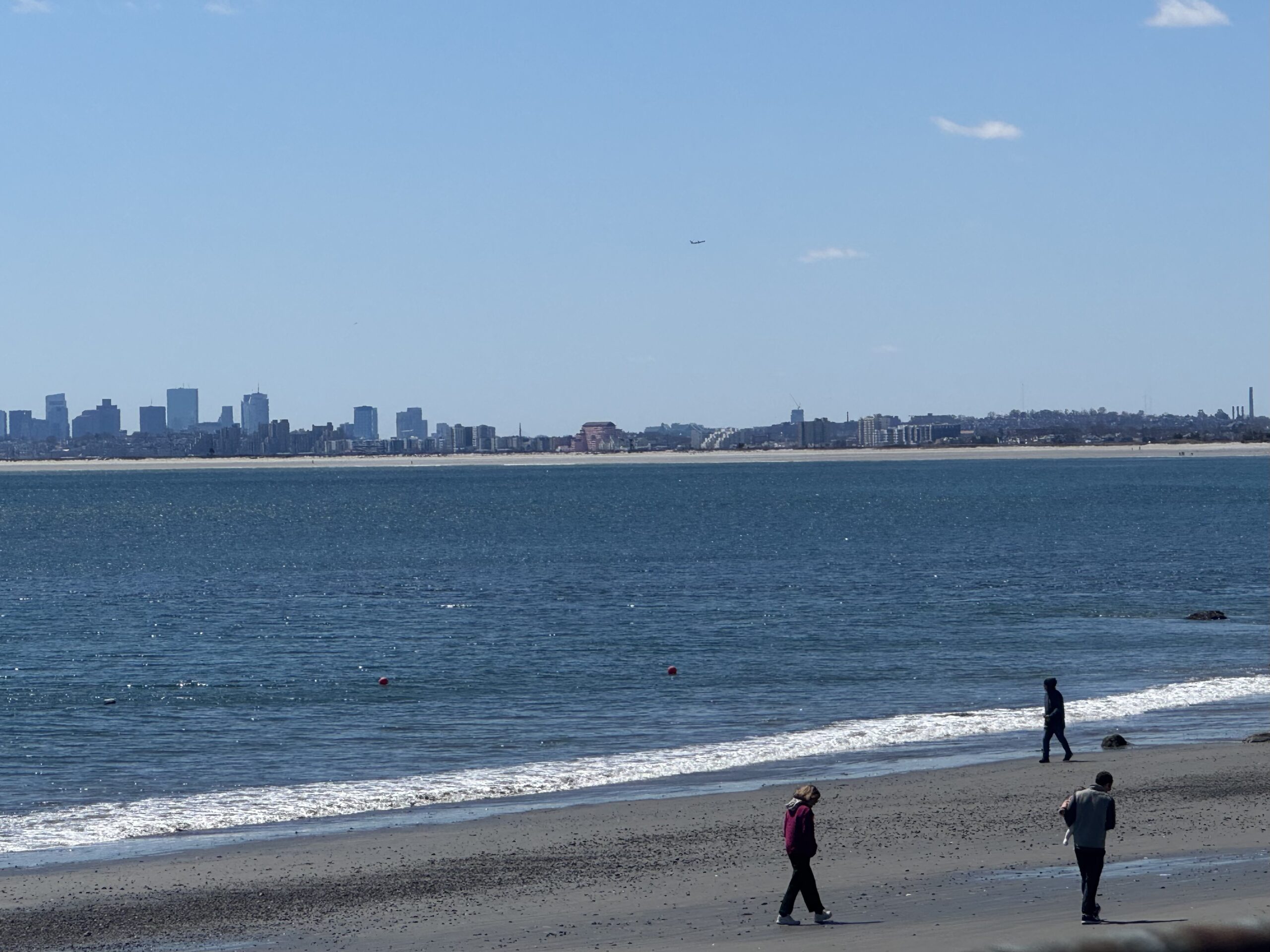
Climate change is already evident in Swampscott and across the North Shore. One of the biggest impacts is the sea level rising, which, according to the Massachusetts Bureau of Climate and Environmental Health, has risen about nine inches since 1900. The water could rise another two to four feet by 2070, the bureau suggests.
This will mean more frequent flooding, even during “normal” high tides. Storm surges during nor’easters and hurricanes can be stronger as well, and all of this leads to potentially damaged roads, homes and waterfront businesses.
“Our whole town is subject to a lot of those environmental changes going on,” said Ted Dooley, the chair of the Harbor and Waterfront Advisory Committee.
While inland buildings may not sit along the water, Dooley noted many are still below sea level. Places like Blocksidge Field are increasingly vulnerable to flooding as storms grow more frequent and intense.
Tania Lillak, the chair of the Open Space and Recreation Committee, said her group and the Climate Action and Resilience Committee are focusing on working with property owners to institute resilience measures for storm surges and other effects to climate change.
Dooley said the pier “gets beat up” due to the frequency and intensity of the storms. Seawalls will also need refurbishment. The Fish House as well “is subject to a lot of that damage.”
“That building gets hit really hard,” Dooley said. “It’s not falling down – I certainly hope it’s not going anywhere any time soon – but it’s certainly something the town has to keep an eye on.”
The Massachusetts Office of Coastal Zone Management shows Swampscott’s flood risks for 2030 expanding from Humphrey Street back to Superior Street, with a lot of the New Ocean Street and Eastern Avenue area at the greatest risk.
“The good news is that the depths are minor so far,” said Richard Frenkel, a member of the Climate Action and Resilience Committee. “We’re working with the contractor the town hired to suggest solutions.”

King’s Beach has been a hot topic within the water realm, particularly for its pollution. Water quality issues at King’s Beach date back nearly a century, when Stacey’s Brook, which flows into the beach, was converted into a combined sewer and stormwater system serving both Lynn and Swampscott. Issues have persisted since 1891, and until this year, King’s Beach ranked as the second-most polluted beach in Massachusetts.
Last summer, an ultraviolet (UV) pilot project operated for about two months. The filtration system treated flows up to approximately 5 million gallons per day. Kleinfelder told the Select Board they were “encouraged by” the results. Other water leaders, however, expressed concerns with the limited data.
“Environmentally, I think the town is finally focused after many years on Kings Beach pollution, and that is clearly something that needs to be taken care of,” Bandrowicz said, adding that the issue will be on the town’s 2030 Master Plan.
Pollution run-off is also a focus for the Open Space and Recreation Committee, Lillak said.
“We’re working on it,” Lillak said, adding that it’s “very helpful” that there are multiple committees working on similar goals and projects because “there’s way too much for us to do.”
While coastal flooding gets a lot of attention, the region is also warming. Summers are bringing more frequent extreme heat days. The National Oceanic and Atmospheric Administration (NOAA) often cites that temperatures have increased by about 3° Fahrenheit since the late 1800s, and days above 90° are increasing. This can pose health risks, especially when nights offer little relief from the heat.
Pavement and buildings absorb heat during the day. Frenkel noted that the geothermal system, which uses the constant temperature of the earth to provide heating and cooling, at the elementary school will save the town a lot of money over time.
Swampscott has a climate action plan, which was adopted unanimously at Town Meeting in 2023. The plan aims to transition to net-zero buildings; prioritize low-carbon mobility; and prepare for climate-driven emergencies; provide equitable access and protection to open spaces, tree canopies and water resources; as well as create a waste management system that reduces the energy demand and emissions.
“We’re a green community. We’ve been a green community since 2010,” said Martha Schmitt, who chairs the Climate Action and Resilience Committee and has driven a lot of environmental changes in town. “Especially on the municipal level, the town’s done well pursuing grants, upgrading HVAC systems, making the buildings more efficient.”
Schmitt noted that LED lights were installed a few years ago, and solar panels were installed at the Swampscott High School and Middle School. Electric Vehicle (EV) charging stations are also in place at the Swampscott High School and Elementary School, Town Hall, with other places like Bocksidge Field in the process.
Frenkel said the work is really two-sided: “doing our bit to reduce greenhouse gas emissions and on the other side trying to deal with the effects of a warming climate.”
“We pursue grants that are targeted at mitigation activities,” Schmitt said. “The municipal vulnerability preparedness program is one grant available, but we haven’t secured an award in the last couple of years. We did get MVP 2.0, and that’s really meant to reach out into the broader community and get input from people who may be more vulnerable and whose voices haven’t been heard before.”
The town received a “sizable grant” alongside Lynn to help fund energy outreach and urge people to sign up for Mass Save. There have been 177 residential heat pump conversions from 2022 to 2024, according to the data from Sponsors of Mass Save. An additional 12 households were income eligible conversions.
“Last year, we did 28 full home conversions in terms of installing heat pumps to provide all the heating and cooling in the house, and 31 partials,” Frenkel said. “94 houses were insulated.”
Last year, Swampscott was announced as a climate leader community, which makes the town eligible for up to $1 million in decarbonization grants as well as up to $150,000 to fund technical studies necessary to design municipal clean energy projects.
One of the requirements to become a climate leader was to have a sustainable energy code which requires new buildings and substantial redevelopments to “be more green,” Schmitt said.
“The new hotel, if it goes in the Hadley building, that would have to conform,” Schmitt said.
There is also a need for trees, as areas with fewer trees can be nearly 15° Fahrenheit hotter than nearby shaded spots. Swampscott has earned its “Tree City USA” status from the nonprofit Arbor Day Foundation and the Department of Conservation and Recreation Urban and Community Forestry Program.
A Salem State University study, which has a 4% margin of error, noted that Swampscott has “both improved and lost foliage based on census blocks.” The highest amount of tree loss took place in the northeast coastal area of the town as well as the southwestern region that borders Lynn. Between 2016 and 2023, the town lost an estimated 56 acres of tree canopy, according to the study.
Lillak noted that her committee and the Tree Committee have worked to replace aged or ailing street trees.
Frenkel, who is also the chair of the Tree Committee, noted that there have been more trees planted than removed since at least 2019.

“We’re doing a good job of increasing the canopies,” Frenkel said. “We’re doing some assisted migration. We’re putting in trees that would have grown further south from us to bring them in here because the future is warmer.”
Lillak said there’s a need for additional “effort and man power,” but that she expects all of the committees’ goals to be completed at some point.
“We’re aware of the problems and we’re working on it,” Frenkel said. “Money is always a problem. There’s just less money to build. On the state-level there’s less money. The federal level. It all comes down to us and doing more outreach.”
Bandrowicz suggested that Swampscott needs a wetland protection bylaw.
“We can’t just shrug our shoulders and say nothing is happening at the federal level, so we’re going to give up. Everyone has to take it on themselves and do what they can to promote environmental protections going forward,” Bandrowicz said.
Swampscott will host an Earth Fest event on Saturday, May 2 from 10 a.m. to 1 p.m. at Town Hall.